This post may contain affiliate links. If you book or buy through them, I may earn a small commission at no extra cost to you. Learn more.
Friday is pizza night in our house, and it has been for a long time. It started before Lochlan, back when it was just Danny and me and a way to end the week that didn’t involve a restaurant or a screen. Now it’s the thing our whole week sort of leans toward. By Thursday I’m already thinking about the dough.
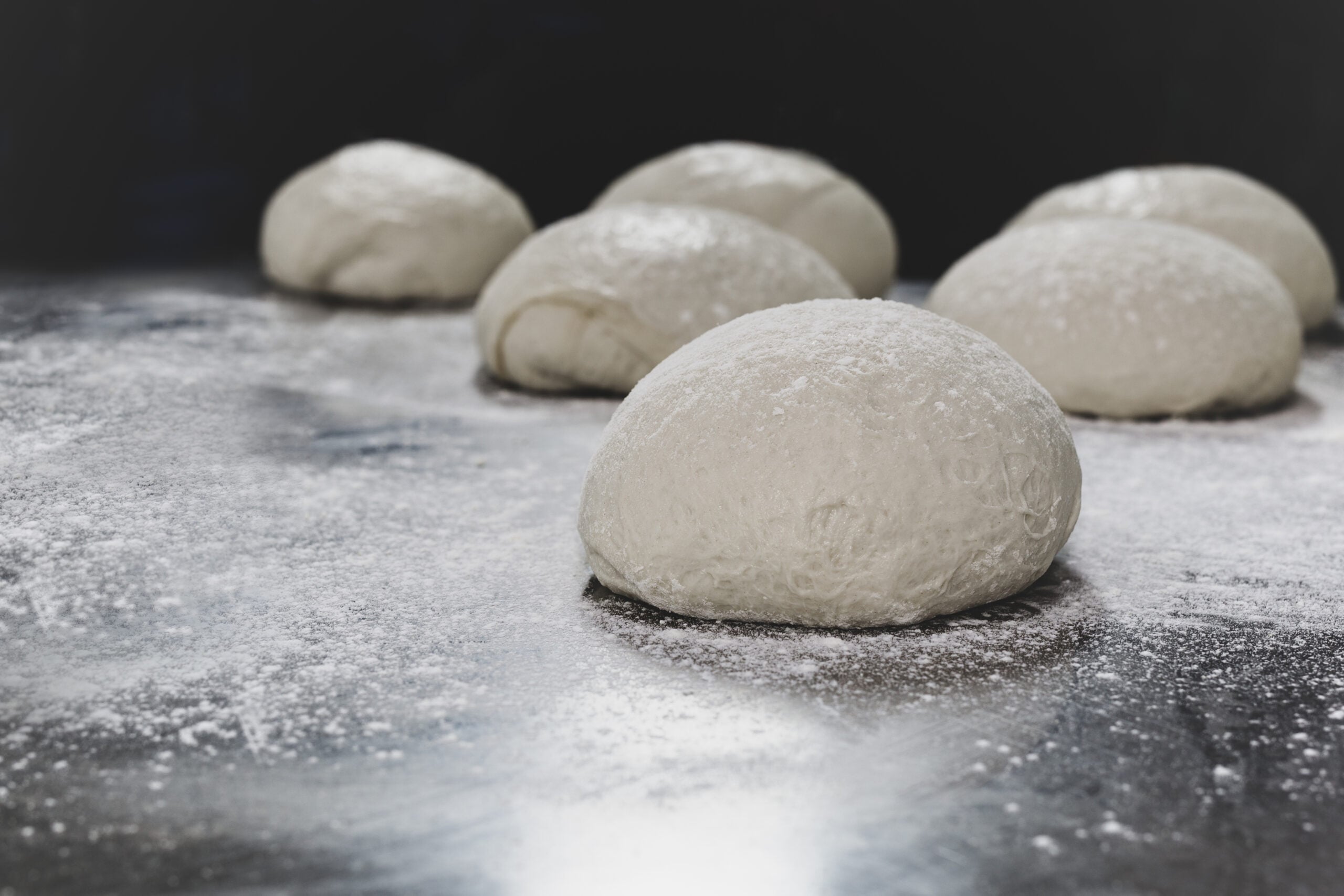
This homemade pizza dough recipe is the one I keep coming back to, and I want to give it to you the way I’d give it to a friend who asked. Not with a long story about Italy I don’t have, just the actual recipe, the way I actually make it, and the parts that matter when you’re tired and it’s already six o’clock.
[ IMAGE: a ball of pizza dough resting in a glass bowl on the farmhouse counter, flour dusting nearby ]Why we make pizza dough from scratch on Fridays
I’ll be honest, it would be faster to buy dough. The store by us sells a decent ball of it for a couple dollars, and there’s no shame in that on a hard week.
But making the dough is half of why Friday feels like Friday for me. There’s something about the rhythm of it. The yeast going foamy, the flour, the few minutes of kneading where I’m not looking at my phone or thinking about anything else. It’s the kind of slow that actually feels good instead of forced. And it costs almost nothing. A bag of flour, a packet of yeast, and we get pizza for the four of us, counting Lochlan’s handful of torn crust, for less than the price of one delivery.
Danny does the toppings, I do the dough, and that division has held for years. It’s ours now.
What you need
This makes two medium pizzas, or one big sheet-pan pizza, which is what we usually do. Everything here is pantry stuff.
- 1 and 1/3 cups warm water (warm like a baby’s bath, not hot)
- 2 and 1/4 teaspoons active dry yeast (one standard packet)
- 1 teaspoon sugar or honey
- 3 and 1/2 cups all-purpose flour, plus a little more for kneading
- 2 tablespoons olive oil, plus more for the bowl
- 1 and 1/2 teaspoons salt
That’s it. No bread flour, no special tools. I’ve made this with a stand mixer and I’ve made it entirely by hand with Lochlan on my hip, and both work.
[ IMAGE: ingredients laid out on the counter, flour, yeast packet, olive oil, honey ]How I make it
Here’s the whole thing, step by step. It looks longer written out than it is in real life. Once you’ve done it twice you won’t need to read it again.
- Stir the yeast and sugar into the warm water. Let it sit for about 5 minutes, until the top goes foamy and a little puffy. This is how you know your yeast is alive. If nothing happens after 10 minutes, the yeast is old, and it’s worth starting over with a fresh packet.
- Add the olive oil to the yeast water and give it a quick stir.
- In a big bowl, mix the flour and salt. Pour the wet into the dry.
- Stir with a wooden spoon until it comes together into a shaggy, sticky ball. It will look like a mess. That’s right.
- Turn it out onto a floured counter and knead for about 5 to 7 minutes, adding small sprinkles of flour only if it’s sticking to everything. You want it smooth and a little springy, not dry. It should feel soft, like the inside of your elbow.
- Wipe the bowl with a little olive oil, put the dough back in, and turn it once so it’s lightly coated. Cover with a clean towel.
- Let it rise somewhere warm for about an hour, until it’s doubled. On our farmhouse counter in winter that can take closer to 90 minutes, so don’t watch the clock, watch the dough.
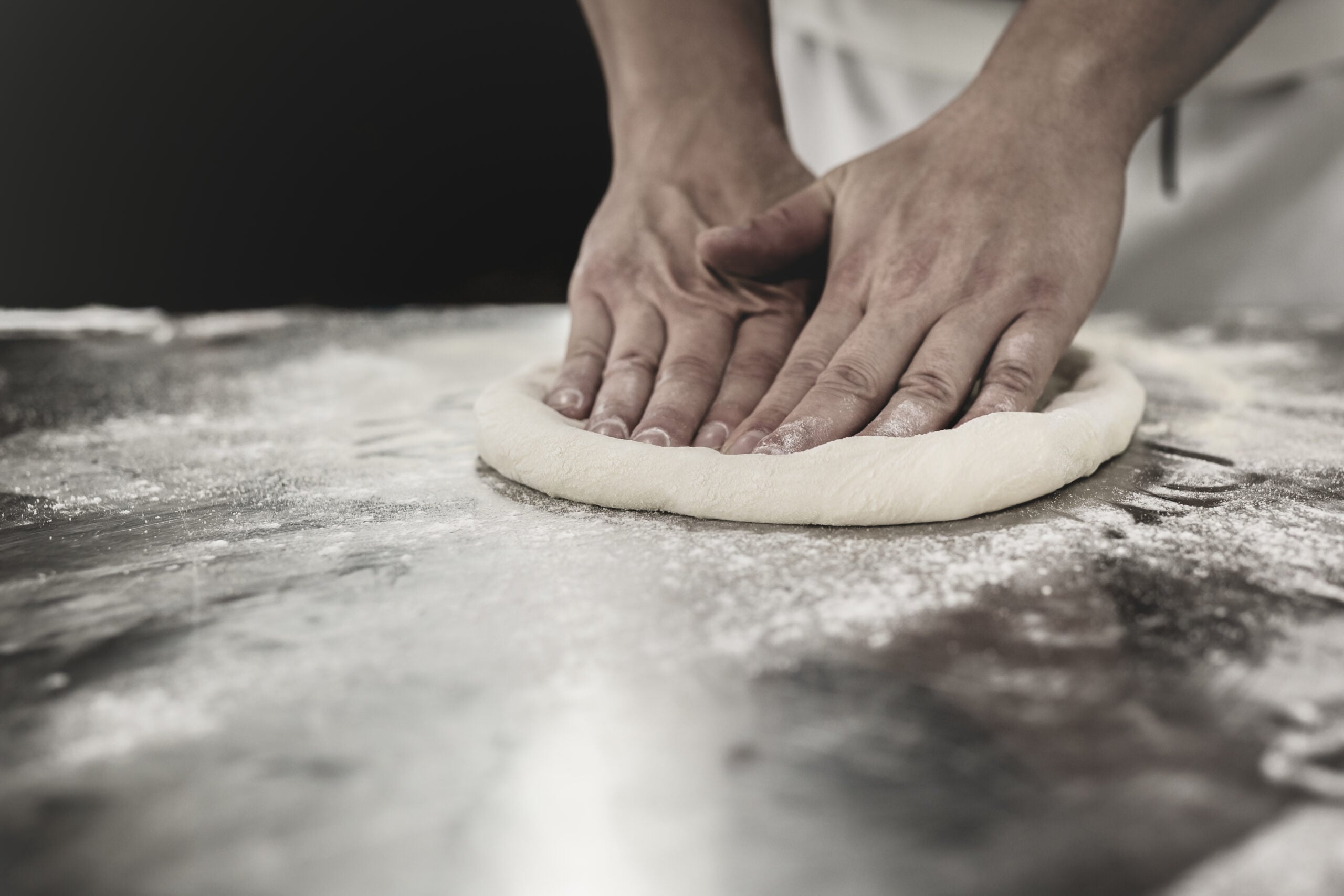
- Punch it down, divide in two (or keep it whole for a sheet pan), and stretch it out with your hands on a floured surface or a piece of parchment. I don’t use a rolling pin. Your fingertips do a better job and leave those little bubbles that crisp up.
- Top it, then bake at 475 degrees for 12 to 15 minutes, until the crust is golden and the cheese is bubbling at the edges.
That warm-water-and-foam step is the only part where people go wrong. If the water is too hot it kills the yeast, and if it’s cold the yeast just sleeps. Warm like bathwater is the whole trick.
Two more things I’ve learned the slow way. If your dough is sticking to your hands no matter how much flour you add, it usually needs another minute or two of kneading, not more flour. The stickiness works itself out as the gluten comes together. And if the dough fights back when you try to stretch it and keeps snapping back, let it rest for ten minutes and walk away. It relaxes, and then it stretches like it wants to. Almost every problem with this dough is solved by either kneading a little longer or waiting a little longer.
Making it ahead, and on low-energy weeks
I have lupus, and some Fridays I just don’t have a full pizza-from-scratch evening in me. So here’s how I make this work when my body isn’t cooperating.
You can make the dough up to two days ahead. After it rises the first time, punch it down, put it in an oiled container with a lid, and keep it in the fridge. It’ll keep rising slowly in there, which actually makes the flavor better. Pull it out about half an hour before you want to use it so it’s not ice cold when you stretch it.
You can also freeze the dough balls after the first rise. Wrap each one and freeze, then move them to the fridge the morning you want pizza. On the hardest weeks, I’ll make a double batch on a good day and freeze half, so future me has dough waiting and Friday still happens even when I’m flat on the couch.
Slow living, for me, has never meant doing everything the long way every time. It means setting things up so the good parts still happen on the hard days. Pizza night counts as a good part.
[ IMAGE: stretched dough on a parchment-lined sheet pan, hands pressing the edges, viewed from above ]How we top ours
We keep our pizzas simple. A good jarred sauce most weeks (I’m not making sauce from scratch on a Friday, let’s be real), fresh mozzarella torn by hand, and whatever’s in the garden or the fridge. In summer that means basil from the back beds and thin tomatoes. In winter it’s usually just cheese, which Lochlan prefers anyway.
Lochlan gets his own corner with no sauce and barely any cheese, cut into strips he can hold. He mostly eats the crust and throws the rest to Dewey, who has figured out that Friday is his favorite night too. Delilah watches from the back of the couch, unbothered, the way she watches everything.
It’s loud and a little messy and flour ends up on the floor every single time. But we’re all in the kitchen together at the end of the week, and the house smells like bread, and that’s exactly the kind of evening I moved out here hoping for.
If you make this, start the dough before you think you need to. That’s my only real advice. Everything else, you’ll figure out by feel, the way I did.
