This post may contain affiliate links. If you book or buy through them, I may earn a small commission at no extra cost to you. Learn more.

I’ve been thinking about content a lot lately — and about what realistic slow living actually looks like when you strip away the aesthetics. What to make, what to share, what version of my life feels worth posting. And somewhere in the middle of that spiral, I had a realization: I really don’t want to go put on makeup, fix my hair, and stylize my kitchen counter just to show you the bread I baked.
And if I don’t want to do that… maybe you don’t either.
What Realistic Slow Living Actually Looks Like Online
Realistic slow living is having a moment, but you wouldn’t know it from most of the content. On screen it’s beautiful: linen aprons, copper cookware, perfectly proofed sourdough on a marble surface. I love looking at it. Most of us do. But somewhere along the way, the aesthetic became the point, and the actual slowness got buried underneath it. The whole appeal of a slow life is that it’s less! Less pressure, less performance, less rushing around trying to get everything right. So why does it look like so much work?
It actually traces back to the Slow Food Movement — a philosophy born in the 1980s as a pushback against fast food culture. The idea was simple: slow down, be intentional, savor what you have. Somewhere along the way that got turned into an aesthetic instead of a feeling.
My Version of Slow Living (It’s Not Pinterest-Worthy)
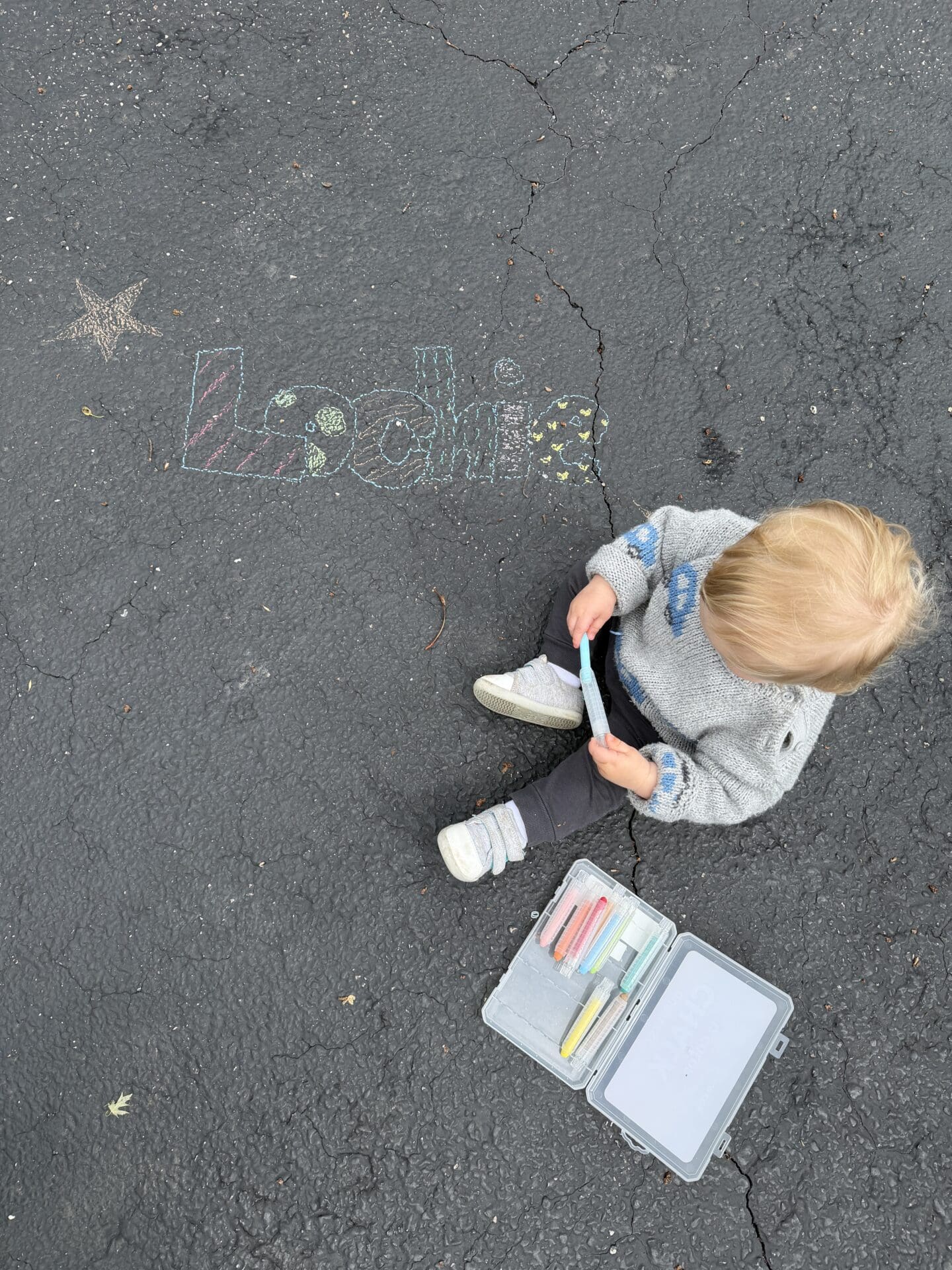
Here’s what realistic slow living with kids actually looks like in my house: I baked bread last week because I wanted to, not because I was going to photograph it. I set up an activity for my son using painters tape on the floor and some mismatched baskets and balls I already had. It wasn’t cute. It wasn’t Pinterest-worthy. But he was giggling and learning and fully absorbed for a solid twenty minutes, and that felt like exactly the kind of morning I want more of. I almost didn’t share it because I thought, who wants to see that? And then I caught myself, because that thought is exactly the problem.
I want a big garden. I’m building one with a greenhouse, a fountain, plans scrawled on paper that may or may not survive contact with reality. My house is lived in. There are toys on the floor and dog hair on the couch and kitchen counters that are a mess. I like nice things and I also don’t always make my bed. Both are true.
Realistic Slow Living Tips That Actually Work
Realistic slow living, to me, is just the intention to be present for the ordinary stuff. A few things that have helped me actually live it, not just pin it:
Bake because it tastes better and the process is satisfying, not because the result is photogenic. Grow things because watching something come out of the ground never gets old. Make a mess with your kid on a Tuesday and not need it to look good. Notice that you’re happy before the moment is over.
You don’t need expensive cookware. You don’t need a styled counter. Intentional living at home doesn’t require a renovation or a wardrobe overhaul. You just need to decide that your version of slow is enough, even when it’s a little chaotic, a little imperfect, and completely, honestly real.
That’s the version I’m going to keep showing you here. And if this resonates, you might also enjoy this post on why I made the change to slow living in the first place.

