This post may contain affiliate links. If you book or buy through them, I may earn a small commission at no extra cost to you. Learn more.
The first cold night in October is when I start thinking about chicken pot pie from scratch. Not the first cold day, the first cold night, when the kitchen has gone cool after dinner and I want the oven on for an hour for no particular reason. Danny calls it the start of soup season. I think of it as the start of pie season, which is a different and better thing.
I make this one maybe six times between now and March. It uses up the end of a roast chicken, the carrots that have gone a little bendy in the crisper drawer, and whatever broth is in the freezer. Nothing about it is fussy. But there are two or three things that decide whether a pot pie is worth the effort or comes out soupy under a pale crust, and I want to tell you about those honestly.
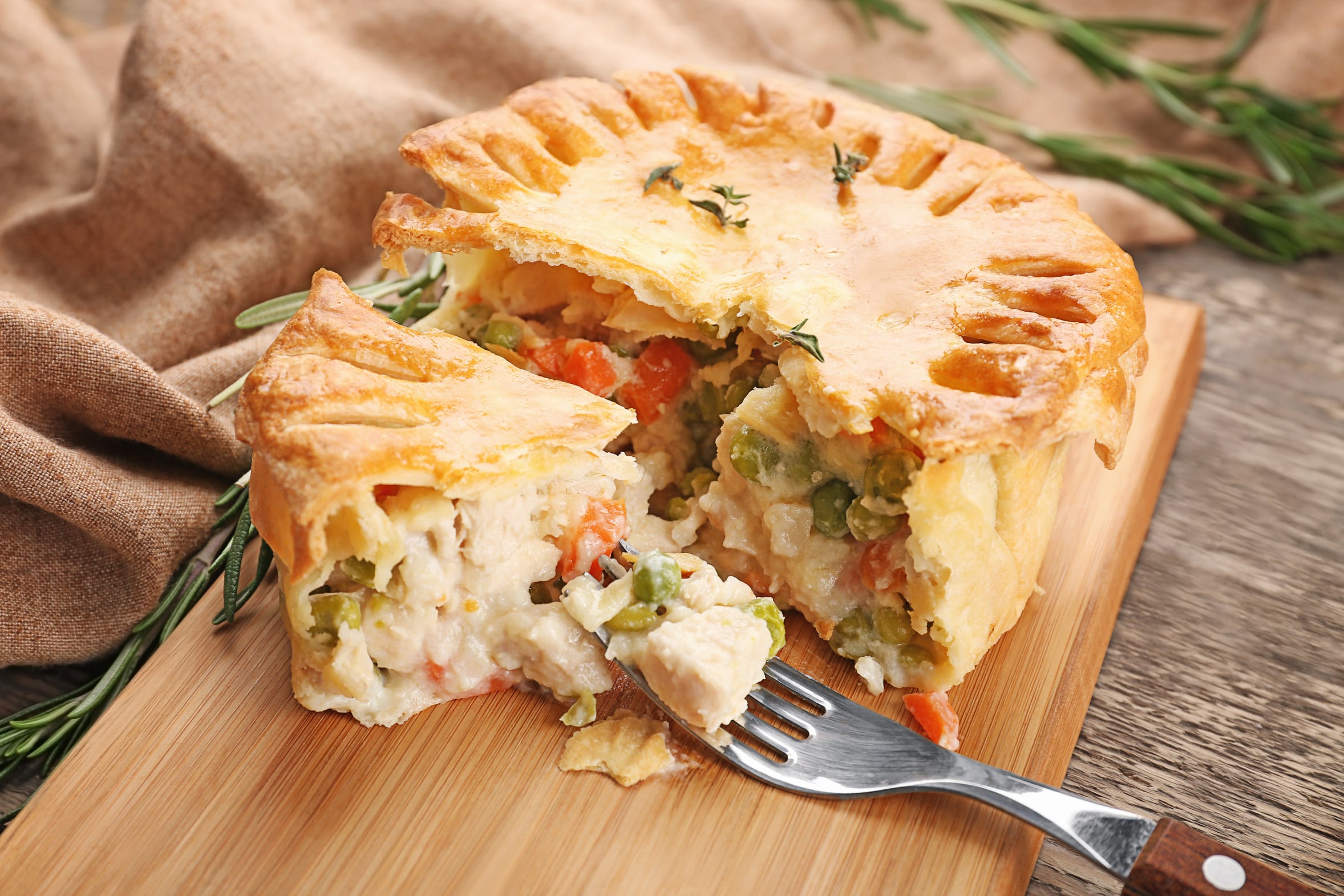
What “from scratch” actually means here
Three parts: crust, filling, and the broth that holds the filling together. You do not have to make all three in one afternoon, and I almost never do.
Here is how it usually goes in my kitchen. Sunday I roast a chicken. Monday the carcass goes in the slow cooker and turns into homemade bone broth. Tuesday or Wednesday, when I have an hour and the energy, the broth and the leftover meat become this. The crust comes out of the freezer, where I keep two discs of all-butter pie crust rolled and wrapped at all times between October and Christmas.
If you want to make the whole thing in one go, you can. Plan on about two hours, most of it hands off.
What I skip: a bottom crust. I used to do a double crust and I stopped. The bottom never crisps the way you want it to under a wet filling, so you end up with a pale, slightly gummy layer that nobody is excited about. One good top crust, pressed down onto the rim of the dish, is better in every way. Fewer dishes too.
I also skip peas most of the time, because Lochlan is not interested in them and I am not fighting that battle in a casserole. Corn goes over better.
The filling, and the part most recipes rush
The filling is a roux and then stock, which is to say it is gravy with things in it. That is the whole trick.
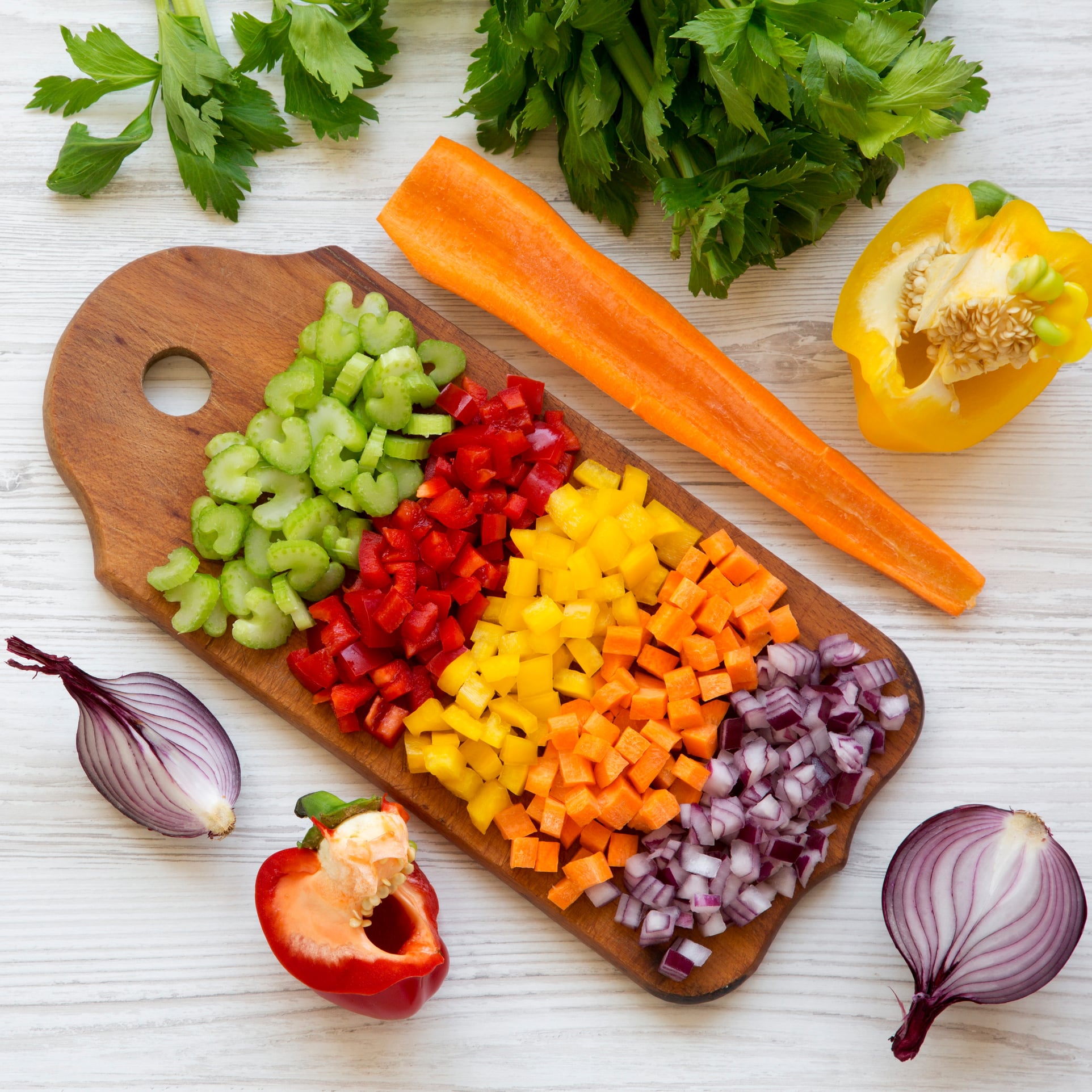
Start with butter in a wide pan, four tablespoons, over medium heat. Add a diced onion, three carrots, and two ribs of celery, all cut small enough to cook through in about eight minutes. Salt them early. You want them soft, and you want the onion to go translucent and smell sweet, not browned.
Then sprinkle a third of a cup of flour over everything and stir it for a solid two minutes. This is the step people cut short. Raw flour tastes like raw flour, and those two minutes of stirring are what turn it into something that tastes like gravy. The vegetables will look pasty and wrong while you do it. Keep going.
Add three cups of broth slowly, half a cup at a time, stirring after each addition until it goes smooth again. If you pour it all in at once you get lumps, and no amount of whisking fully fixes them. Then let it simmer for five to eight minutes.
Here is the honest part. It has to get thicker than you think it should. Thick enough that a spoon dragged across the bottom of the pan leaves a line that holds for a second. If it looks like a good soup in the pan, it will bake into a soup in the dish. Everything loosens under a crust as it heats through, so you are aiming for too thick on purpose.
Off the heat, stir in three cups of shredded cooked chicken, a cup of corn, a splash of cream if you have it, a lot of black pepper, and about a teaspoon of fresh thyme. Then taste it. It should taste good enough to eat with a spoon right then, because the crust is not going to add seasoning later.
The crust, and getting it actually golden
One disc of pie dough, rolled about an inch wider than your dish. My pie crust post covers the method by hand, so I will keep this to the pot pie part.
Let the filling cool for fifteen or twenty minutes before the crust goes on. Butter crust on hot filling starts melting before it ever hits the oven, and you lose the layers you worked for. I use that time to wash the pan.
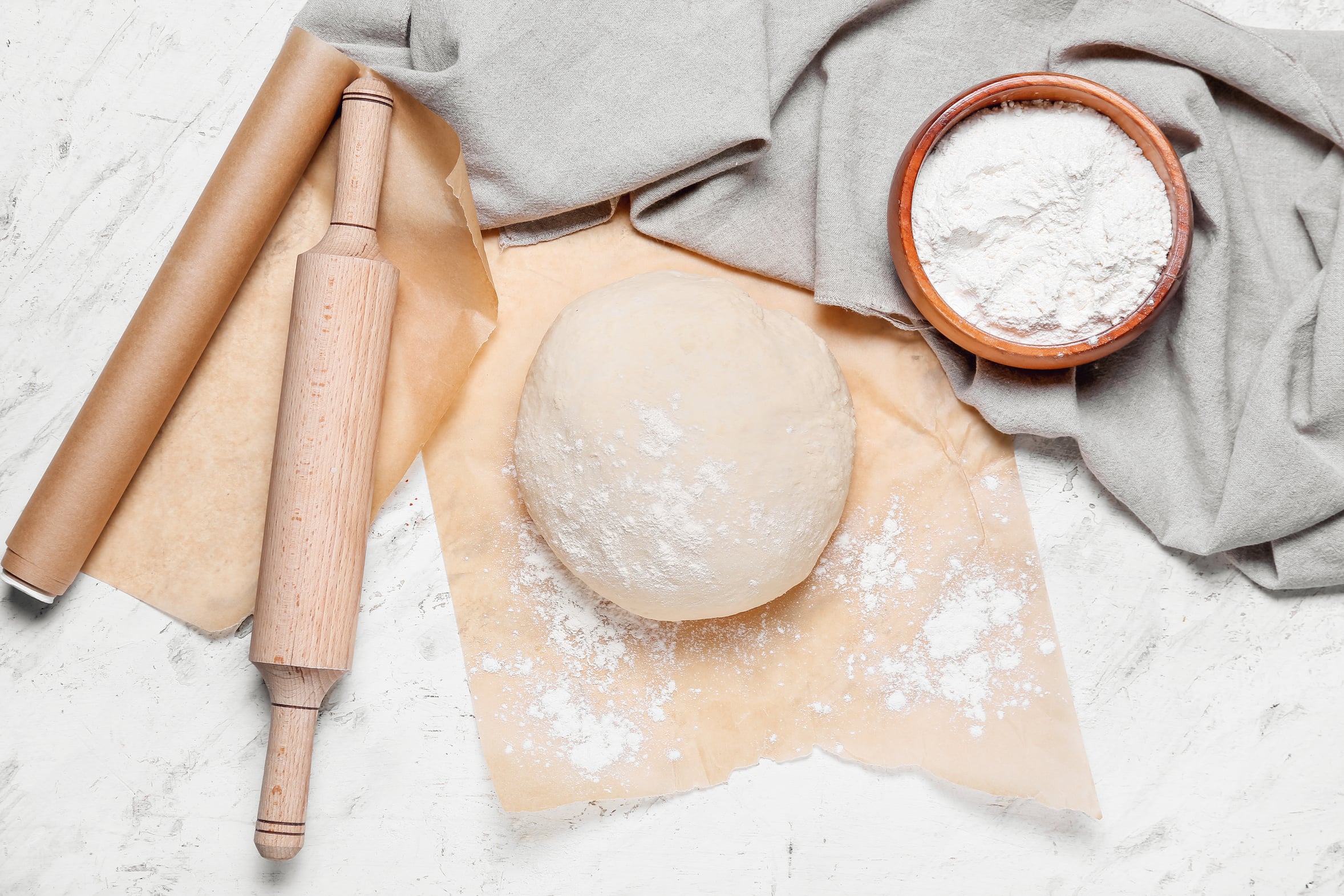
Roll the dough out, lay it over the filling, press the edge onto the rim of the dish, and cut four slits in the middle. Not decorative slits. Real ones, big enough to let steam out. Then brush the whole top with an egg beaten with a splash of water. The egg wash is not optional if you want the deep brown color, and a pale pot pie always tastes like it is missing something even when it is not.
425 degrees for 35 to 40 minutes, on a sheet pan, because it will bubble over and it will do it on the one night you forgot the sheet pan. Then let it sit for ten minutes before you cut into it. I know. Ten whole minutes.
Making it ahead, and the version for tired days
I have an autoimmune disease, and some weeks a three-part dinner is more than I have in me on a Wednesday. So I make this ahead more often than not.
Assembled and unbaked, covered, it keeps in the fridge for a day. Add about ten minutes to the bake time and put it in cold.
For the freezer, I make the filling, cool it all the way down, and freeze it flat in a quart bag. The crust discs are already in there. On the night I want it, the filling thaws in a pan over low heat while the oven comes up, and I am assembling in ten minutes with nothing to chop. Batching the components like that is most of how I handle from-scratch meal prep on low-energy days, and it is the only reason this stays in our rotation at all. If you keep a freezer of from-scratch meals, a double batch of pot pie filling earns its space better than almost anything else in there.
And the real tired-day version: skip the pie crust and drop biscuit dough on top instead. It is not the same and I am not going to pretend it is. But it is good, and it takes ten minutes.
🛒 A few things I use for this
- A deep ceramic pie dish, because a standard shallow one overflows with this much filling.
- A 10-inch cast iron skillet if you want to make the filling and bake it in the same pan.
- A pastry blender for cutting butter into flour without a food processor.
- Wide mouth quart jars for the broth, which is the part I always have too much of.
As an Amazon Associate I earn from qualifying purchases.
A note on the chicken
You do not need a roast chicken for this. A rotisserie chicken from the store works, and so does a pound and a half of thighs poached right in the broth you are about to use, which is what I do when I planned badly. If you poach them, keep that liquid and use it as part of your three cups.
If you have ever made chicken noodle soup from a carcass, you already know how much meat comes off one bird. It is about three cups, which is not a coincidence. Pot pie and chicken soup are the same project pointed in two directions.
Questions I get about this one
Why is my pot pie filling runny?
Almost always because the filling did not simmer long enough before it went in the dish. It should be noticeably thicker than gravy when you pour it in. The other cause is skipping the rest after baking, since the filling needs those ten minutes to set up.
Can I use store-bought crust?
Yes, and I have. A refrigerated rolled crust is fine here because there is only one of them and it is on top, where butter matters less than it does in a fruit pie. Still brush it with egg.
Do I need to pre-cook the vegetables?
Yes. Raw carrots and celery will not cook through in 35 minutes under a crust, and you end up with crunchy carrots in hot gravy. Eight minutes in butter first solves it.
How long does it keep?
Four days in the fridge. The crust goes soft, so I reheat slices in a 350 degree oven for fifteen minutes rather than the microwave. It is not quite as good as night one, but it is close.
Can I freeze it fully assembled?
You can, but I would not. The crust takes on freezer taste and the bottom edge gets soggy as it thaws. Freezing the filling on its own and keeping dough discs separately gives you a much better pie for the same amount of work.
Dewey lies under the oven door the entire time this bakes, which is his one real opinion about autumn. Danny eats the leftovers cold, standing at the counter, which I have decided not to comment on.
If you make it, let the filling get thicker than feels right. That is the one thing.

