This post may contain affiliate links. If you book or buy through them, I may earn a small commission at no extra cost to you. Learn more.
The first cold morning came last week. Not cold the way Long Grove gets in January, just cold enough that I shut the kitchen window for the first time since May and put socks on before I came downstairs. That is the morning I start making homemade chicken noodle soup again, and once I start I keep making it most weeks until the garden comes back.
I know there are about four thousand recipes for this soup on the internet. I am not going to pretend mine is a secret. What I can tell you is how I actually make it in this kitchen, on a Tuesday, with a nineteen-month-old underfoot, and which parts genuinely matter. Most of what makes this soup good happens before you ever think about noodles.
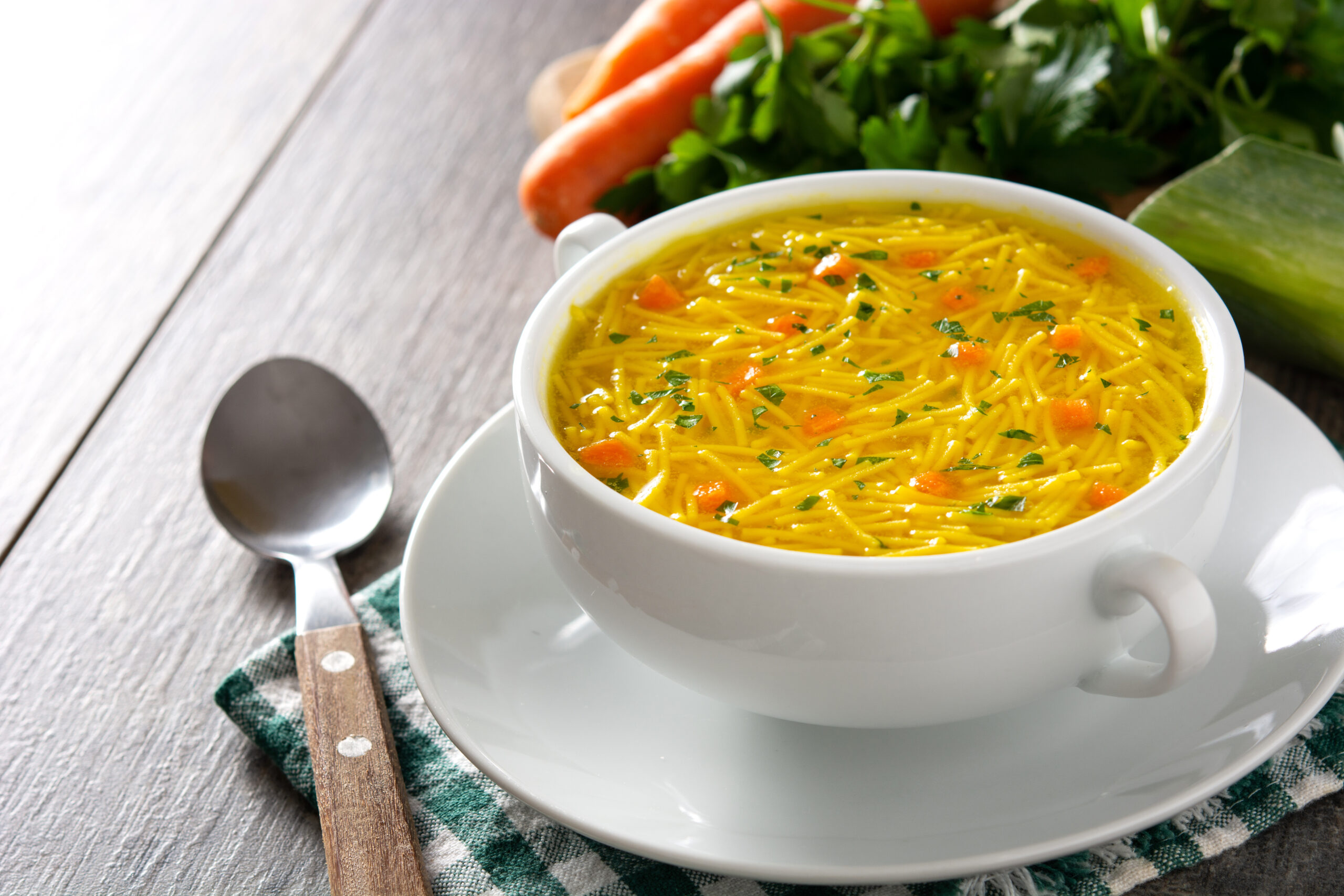
I start with a whole chicken, and I would not skip that part
For years I made this soup with boneless breasts and a carton of store broth, and it was fine. It was soup. It tasted like something warm to eat when you were sick. The difference between that version and this one is a whole chicken, and it is not a small difference.
A four to five pound bird runs me around nine dollars at the market here. It gives me the meat for the soup, a pot of real broth, and a carcass I put in the freezer for later. That is three things from one purchase, which is the kind of math I like. Store broth cannot do the thing where the soup goes slightly thick as it cools, because that thickness is collagen from the bones and there is no shortcut to it.
I buy a whole chicken most weeks now for exactly this reason. If you already make bone broth using my slow, from-scratch method, you know the routine and you can use broth you already have frozen. If you do not, this soup is a gentler way in, because you are making the broth and dinner in the same afternoon instead of committing to a 24-hour pot.
The broth needs time, not attention
Here is the part I want to be honest about. The broth takes about two hours. It does not take two hours of work. It takes ten minutes of work and then it sits there while you do something else entirely.
I put the whole chicken in my Dutch oven with a halved onion (skin on, it makes the broth golden), two carrots snapped in half, two ribs of celery, a few cloves of garlic, a bay leaf, a generous spoonful of salt and about ten peppercorns. Cold water to cover by an inch. I bring it up until it is just barely moving, never a hard boil, and then I leave it alone for an hour and a half.
A hard boil is the one mistake I would tell you to avoid. It emulsifies the fat into the liquid and you end up with cloudy, slightly greasy broth. Barely simmering the whole time gives you broth you can see through, which is the thing people notice and cannot name.
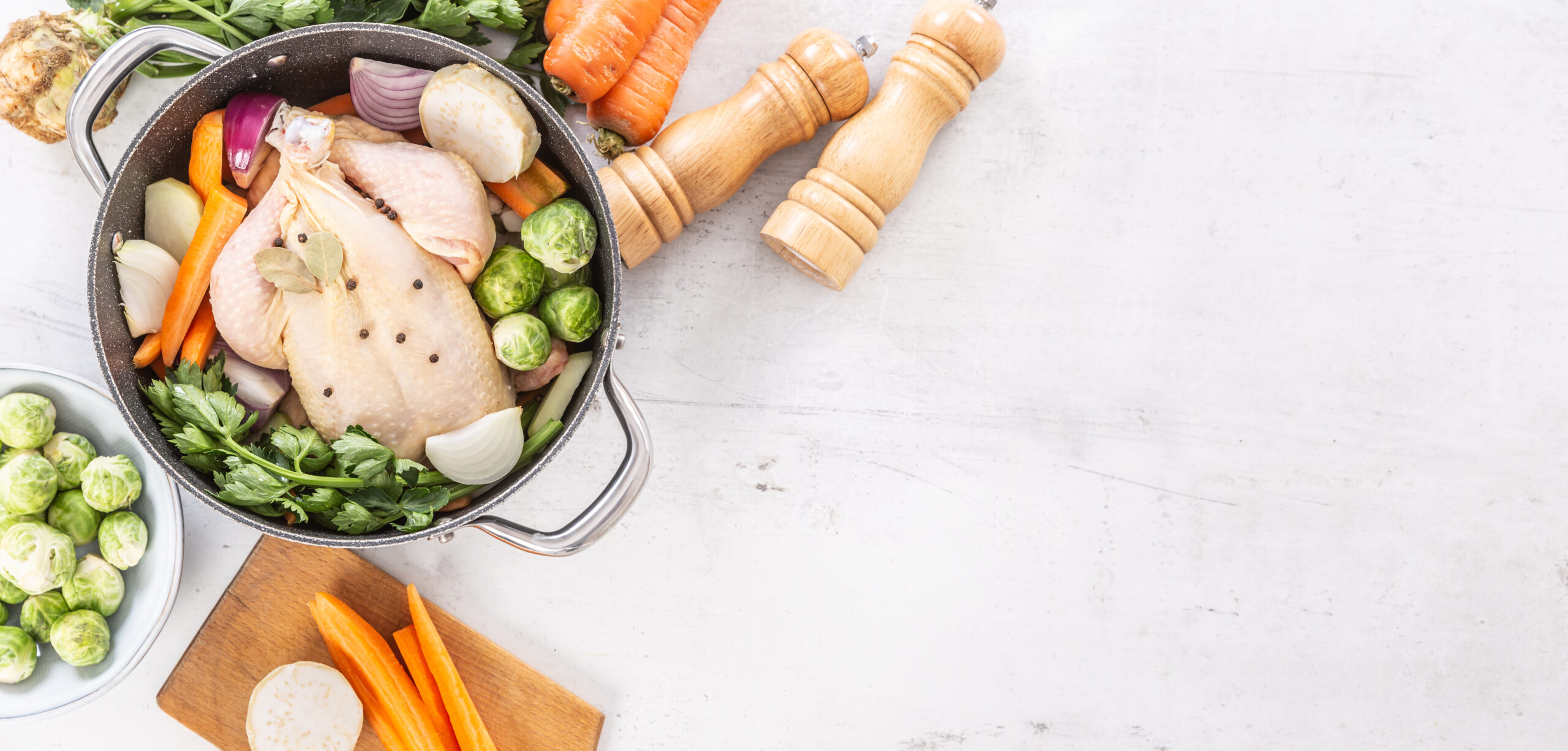
Then I pull the chicken out onto a sheet pan to cool, strain the broth through a fine mesh strainer, and throw away the spent vegetables. They have given everything they have. The fresh carrots and celery that go in the actual soup are a separate step, and they should be, because vegetables that have simmered for ninety minutes have no texture left.
I have an autoimmune disease, and there are stretches where standing at the stove for an afternoon is not something I have in me. This is the soup I can still make on those days, because almost all of the time is waiting. Dewey lies down in front of the oven the whole time the broth is going, which tells you something about how the house smells.
How I put the soup together
Once the broth is strained and the chicken has cooled enough to handle, the soup itself comes together in about twenty-five minutes.
What goes in:
- About 10 cups strained chicken broth
- Meat from one whole cooked chicken, pulled into pieces (usually 4 to 5 cups)
- 3 carrots, sliced into coins
- 3 ribs celery, sliced
- 1 yellow onion, diced small
- 2 tablespoons butter
- 2 cloves garlic, minced
- 2 teaspoons fresh thyme, or 1 teaspoon dried
- 6 to 8 ounces egg noodles
- Juice of half a lemon
- A good handful of chopped parsley or dill
- Salt, and more salt than you think
What I do:
- Melt the butter in the empty pot. Add the onion, carrots and celery with a big pinch of salt and cook them over medium for about 8 minutes, until the onion is soft and the carrots have lost their raw edge. Add the garlic and thyme and give it one minute.
- Pour the broth back in. Bring it to a simmer and let it go 10 minutes, so the vegetables finish cooking in the broth instead of in butter.
- Add the pulled chicken. Taste it. It will almost certainly need more salt than you expect, because you are salting ten cups of liquid.
- Add the noodles and cook them according to the package, usually 6 to 8 minutes. Or cook them separately, which I explain below.
- Off the heat, add the lemon juice and the herbs. The lemon is not optional in my opinion. It is what keeps the whole pot from tasting flat and heavy.
That is it. I serve it with a loaf of my simple sourdough and salted butter, and that is dinner for the three of us with enough left for Danny’s lunch.
🛒 A few things I use for this
- A 7-quart enameled Dutch oven, which is what I simmer the broth in and then build the soup in
- A fine mesh strainer for the broth, so you do not end up with peppercorns in the bowl
- Wide mouth quart jars for the broth I do not use that day
- Extra wide egg noodles when I am not making my own
- A plain wooden rolling pin for the weeks I do make my own
As an Amazon Associate I earn from qualifying purchases.
The noodles, and the leftovers problem nobody warns you about
Store-bought extra wide egg noodles are what I use most weeks and I have no complaints about them. But if you have an hour and you want to understand why this soup is such a big deal to people who grew up with it, make the noodles.
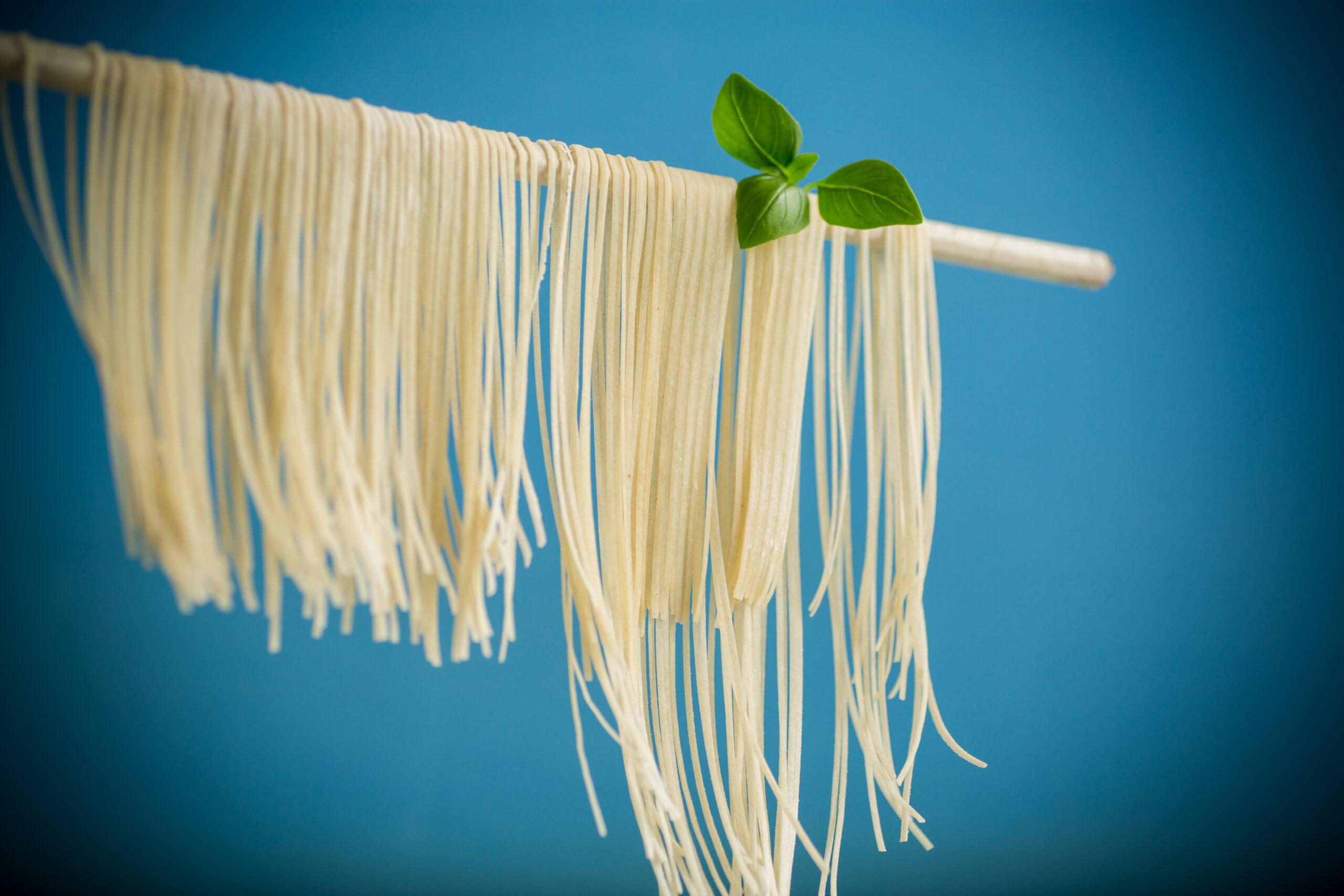
Two cups of flour, three eggs, a half teaspoon of salt, and a splash of water if it will not come together. Knead it for five minutes, let it rest covered for thirty, then roll it thin and cut it into strips with a knife. They do not need to match. Mine never do. They cook in about four minutes in the simmering broth and they come out chewy and a little irregular in a way no dried noodle manages.
Now the part almost no recipe tells you. Noodles cooked in the soup keep drinking the broth in the refrigerator. By the next afternoon you have a pot of very soft noodles in not much liquid, and by day two it is closer to a casserole. This is not a failure, it is just what starch does.
So on any batch I plan to eat all week, I cook the noodles separately in salted water, keep them in their own container, and put a scoop in the bowl before I ladle the soup over. It is one extra pot and it means Thursday’s bowl tastes like Tuesday’s. I use the same trick with most of the soups in my from-scratch meal prep rotation for low-energy days.
The soup itself freezes beautifully, as long as the noodles are not in it. I freeze it flat in quart bags, which thaw in an afternoon on the counter. If you want the other soup I keep in the freezer all winter, it is butternut squash soup without any cream in it.
A few things people ask
Can I use rotisserie chicken? You can, and the soup will be good. You will be using store broth, so you lose the body that comes from the bones. If you go this route, save the rotisserie carcass and make broth from it the next day for the following batch.
Why is my broth cloudy? It boiled. Keep it at the point where a bubble comes up every second or two and no harder.
How long does it keep? Four days in the refrigerator with the noodles stored separately, three months in the freezer. Reheat it gently on the stove, not at a rolling boil.
I cut the noodles short for Lochlan and let his bowl sit until it is barely warm, which takes longer than you would think and is worth building into the plan.
If you have never made soup starting from a whole chicken, this is the one to start with. Put the pot on around two o’clock on a cold Saturday, go do something else, and come back to a house that smells like the best possible version of itself.

