This post may contain affiliate links. If you book or buy through them, I may earn a small commission at no extra cost to you. Learn more.
The first pumpkins came in off the vine last week, and I roasted three of them on a Tuesday afternoon while Lochlan napped. That is usually how it goes here. The pumpkins ripen faster than I am ready for them, and then there are one cup portions of puree stacked in the freezer and I have to decide what to do with all of it.
Pumpkin bread with fresh pumpkin puree is what I make first, every single year. It is better than the canned version, and I say that as someone who baked with canned pumpkin for a decade and thought it was fine. But it is also a little trickier, and almost nobody tells you why. Fresh pumpkin holds more water. If you swap it straight into a recipe written for canned, you get a loaf that looks perfect on top and is gummy in the middle.
So this is the recipe, and it is also the explanation. Here is how I make it work in my kitchen.
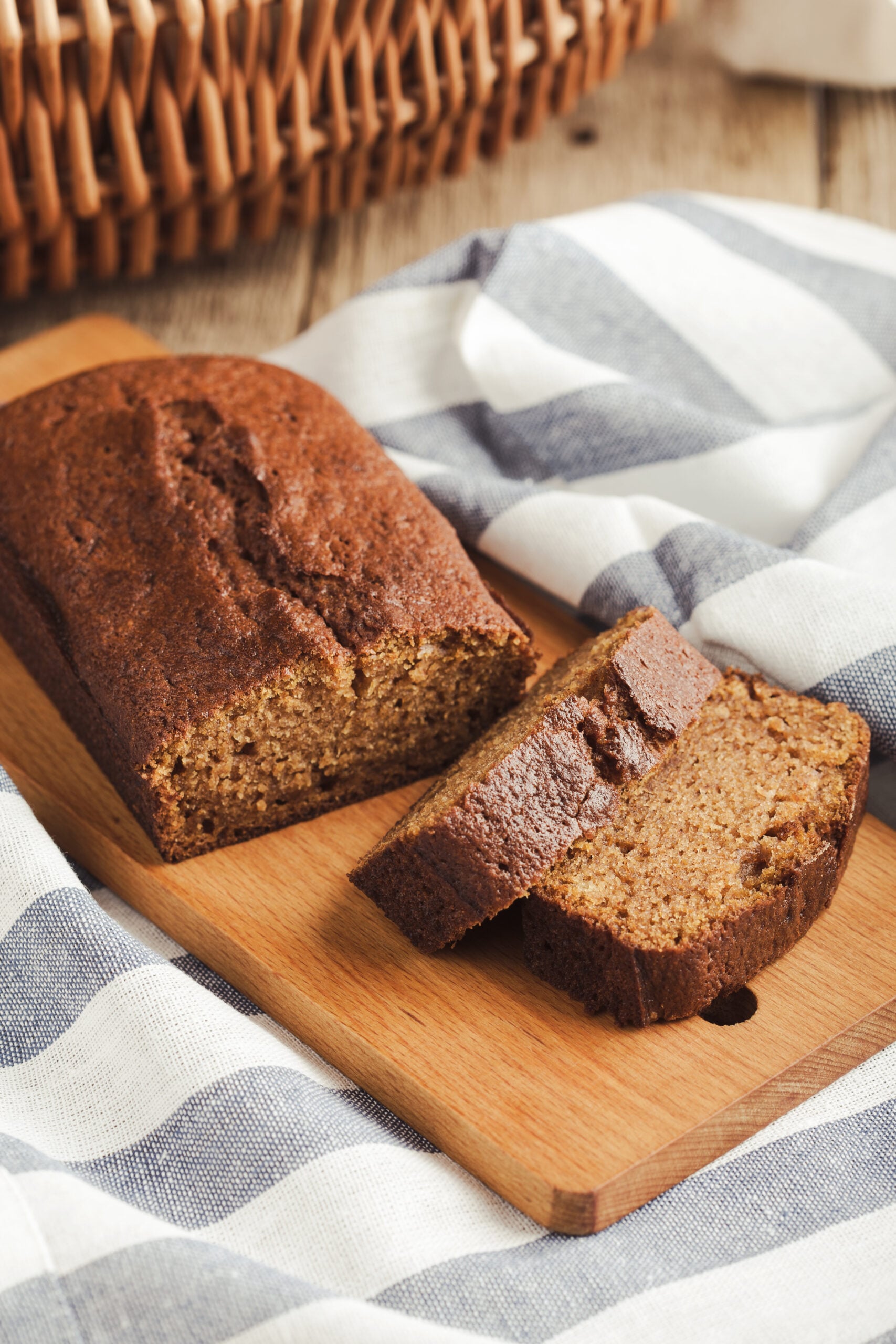
Why fresh puree changes the recipe
Canned pumpkin is cooked down and consistent. Every can is basically the same. Fresh puree is whatever your pumpkin happened to be that year, and a wet one can throw off the whole loaf.
That is the whole reason I strain mine. I go through the full process in my post on how to make homemade pumpkin puree without it going watery, but the short version is that after roasting and blending, the puree sits in a cheesecloth-lined sieve in the fridge for at least four hours. Overnight is better. What drains out is shocking the first time you see it. Sometimes half a cup of pale water from a single batch.
Once it is strained, fresh puree behaves close enough to canned that you can bake with confidence. If you skip the straining, add two tablespoons of flour to the recipe below and expect a denser loaf. That is not a disaster. It is just not the loaf I want.
The other thing I do now is weigh the puree. One cup should be around 245 grams. A cup measured loosely with a spoon and a cup packed in tight are not the same amount of pumpkin, and with a batter this wet, that difference shows up.
What you need
Nothing unusual. I keep all of this in the pantry from September through Christmas.
- 1 cup strained pumpkin puree (about 245g)
- 1 3/4 cups all-purpose flour (220g)
- 1 teaspoon baking soda
- 1/2 teaspoon baking powder
- 3/4 teaspoon fine salt
- 1 1/2 teaspoons cinnamon
- 1/2 teaspoon ground ginger
- 1/4 teaspoon nutmeg
- 1/8 teaspoon cloves
- 3/4 cup brown sugar, packed
- 1/4 cup white sugar
- 1/2 cup neutral oil or melted butter
- 2 eggs, room temperature
- 1 teaspoon vanilla
I use oil more often than butter, which feels like a strange thing for a from-scratch kitchen, but oil keeps the crumb soft for three or four days and butter does not. Butter tastes better on day one. Oil wins by day two. Most of our loaves need to last past day one.
🛒 A few things I use for this
- A 9×5 metal loaf pan. Light colored metal, not glass. Glass insulates and you end up with raw center and dark edges.
- A digital kitchen scale. This is the one thing that made my baking consistent, and it cost less than a good sheet pan.
- Unbleached cheesecloth for straining the puree. I rinse and reuse the same pieces all fall.
- An instant read thermometer. A toothpick lies about quick breads. Temperature does not.
As an Amazon Associate I earn from qualifying purchases.
How I make it
Heat the oven to 350 and grease a 9×5 loaf pan. I line mine with a strip of parchment running the long way so I can lift the loaf straight out.
Whisk the flour, baking soda, baking powder, salt and spices together in one bowl. In a bigger bowl, whisk the sugars, oil, eggs, vanilla and pumpkin until it looks smooth and a little glossy. There is no creaming step and no mixer. I do all of it with one whisk and one spatula, standing at the counter with Dewey underfoot hoping something falls.
Add the dry to the wet and fold it together until you cannot see flour anymore. Then stop. Quick breads get tough when you keep going, and the batter should look thick and slightly lumpy, not smooth like cake batter.
Pour it in the pan and bake 60 to 70 minutes. If the top is getting dark at the 45 minute mark, lay a piece of foil loosely over it. The loaf is done at 200 to 205 degrees in the center. If you do not have a thermometer, a skewer should come out with a few dry crumbs and absolutely no wet batter.
Cool in the pan for 15 minutes, then lift it out onto a rack and let it cool the rest of the way before you cut it. I know. This is the hardest part and I fail at it regularly. Cutting hot quick bread compresses the crumb and makes it seem gummy even when it baked perfectly.
What I have learned making this every fall
A few things that took me several loaves to sort out.
Gummy usually means wet, not underbaked. If the middle is dense and sticky but the skewer came out clean, the puree had too much water in it. Strain longer next time.
Different pumpkins give you different loaves. Sugar pumpkins are what I grow and roast. Butternut makes a smoother, slightly sweeter puree and honestly bakes a little better, so if your pumpkins were disappointing this year, do not feel bad about using squash instead.
Doubling works, but bake them separately. Two loaves on the same rack at the same time come out unevenly in my oven. I bake one, then the other, and the second one goes straight to the freezer wrapped in foil inside a bag. It keeps about three months and thaws on the counter in a few hours.
The spice amounts are a starting point. Danny likes it heavier on the ginger. I like more cinnamon. I have stopped pretending there is one correct ratio.
On the days when my autoimmune disease is loud and I do not have much to give, this is still a recipe I can manage, because the puree is already made and sitting in the freezer in one cup portions. That is the entire reason I portion it that way. Past me does the hard part so present me only has to whisk. It is the same logic behind my from-scratch meal prep on low-energy days, and it is most of how anything from scratch actually happens here.

What we eat it with
Warm, with butter, mostly. Lochlan gets a thumb-sized piece torn up on his tray and he is at the stage where he inspects it before he commits.
The better answer is the apple pairing. A slice of this with a spoonful of crockpot apple butter spread over it is the best thing I eat in October, and if you have a freezer full of homemade applesauce from this month, that works too. It is a lot of fruit and squash on one plate and I have made peace with that.
It also travels well. This is the loaf I bring when someone in Long Grove has a baby or a hard week, because it survives being wrapped in a towel and set on a passenger seat.
Questions I get about this one
Can I use canned pumpkin instead? Yes, cup for cup, no changes. The loaf will be a little more uniform and a little less interesting.
Can I cut the sugar? You can take it down to 3/4 cup total and it still works. Below that the crumb gets dry and the loaf does not brown properly.
Can I add chocolate chips? Three quarters of a cup, tossed in a spoonful of the flour first so they do not sink. We do this about half the time.
Why is the top cracked? That is supposed to happen. Quick breads set on the outside while the middle is still rising, and it splits. A loaf with no crack usually means the oven was too cool.
If you have pumpkins sitting on your counter right now, roast them this week. They keep better as puree than as pumpkins, and then this bread is thirty minutes of work on an afternoon you did not plan for it.

