This post may contain affiliate links. If you book or buy through them, I may earn a small commission at no extra cost to you. Learn more.
Every year I mean to start my vanilla in August, and every year it is the end of September before I get to it. That is where I am right now. The apples are done, the tomatoes are almost done, and there is finally an afternoon where nothing in the kitchen needs me. So today it is vanilla.
Homemade vanilla extract is the least impressive project in my kitchen and probably the one I am most glad I started. There is no technique to it. You split beans, you cover them in vodka, you put the jar in the back of a cupboard and forget about it for months. That is the whole thing. It costs about half what good store-bought vanilla costs, it tastes better, and come December I have something to give people that took me twelve minutes and looks like it took real effort.
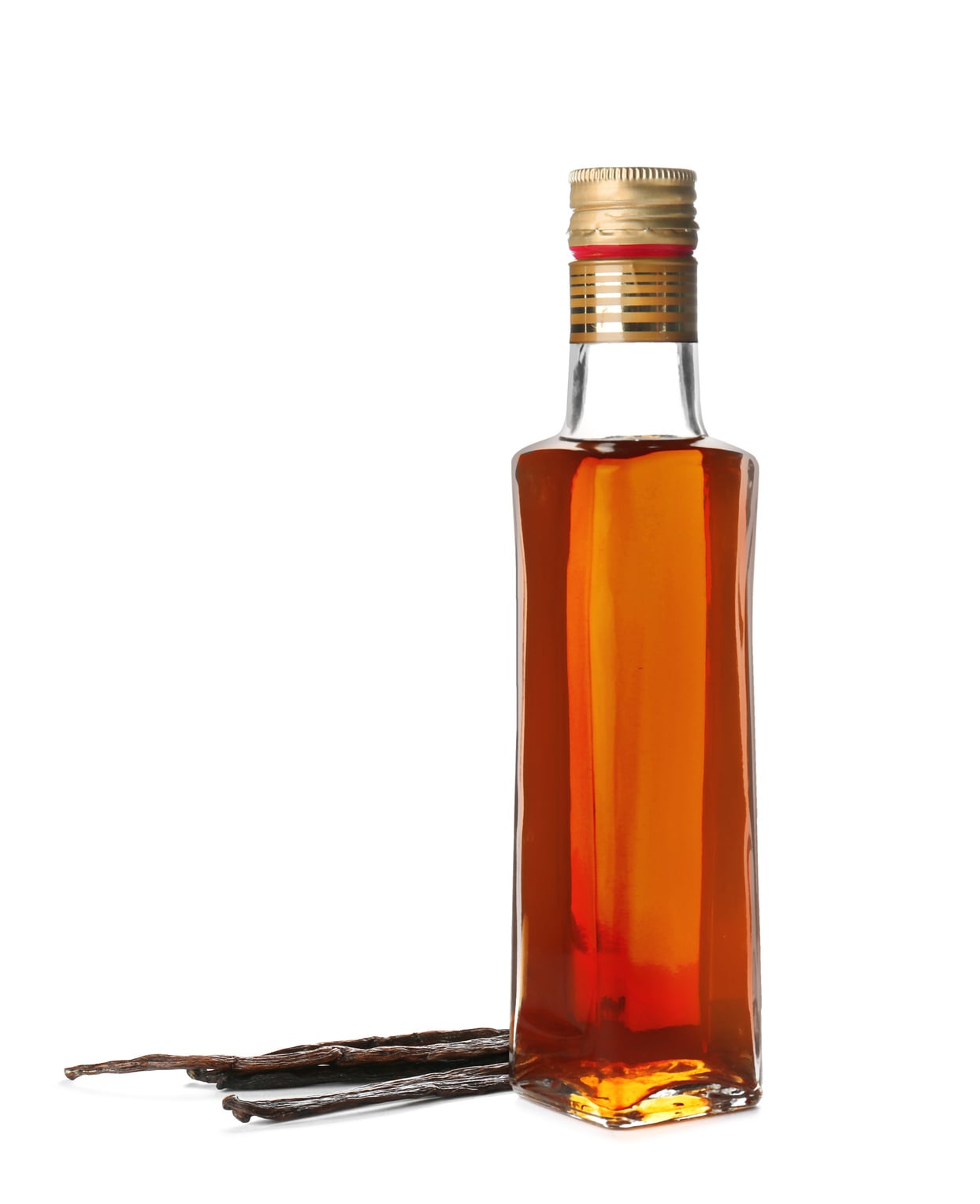
If you are reading this in the fall and wondering whether it is too late to start a batch for Christmas, keep reading. The honest answer is more interesting than yes or no.
What you need, and what I actually buy
Two ingredients. Beans and alcohol. That is it.
Vanilla beans. Buy Grade B, not Grade A. This is the one thing I wish somebody had told me the first time, because Grade A beans are the pretty plump ones sold for scraping into custard, and they cost more for no benefit here. Grade B beans are drier and look a little sad, and that is exactly what you want. Less water, more concentrated flavor, cheaper per bean. They are sometimes labeled extract grade for that reason.
Madagascar (also sold as Madagascar Bourbon) is the flavor most of us think of as vanilla. Creamy and round. Mexican beans are darker and a little smoky. Tahitian beans lean floral and are lovely in custards but not my first pick for an everyday extract. I buy a quarter pound of Madagascar Grade B, which runs me somewhere around 25 beans, and that makes three good-sized jars.
Alcohol. Vodka, 80 proof, nothing fancy. The flavor of the vodka mostly disappears into the beans, so there is no reason to pour the good bottle in. You need at least 35 percent alcohol for the extraction to work properly, which every standard 80 proof bottle clears. Skip flavored vodka. Bourbon makes a warmer, rounder extract that I love in banana bread and oatmeal cookies. Rum works too and goes a little tropical.
Jars. I use a quart mason jar to steep and then pour off into small amber bottles when it is time to give it away. Anything with a tight seal is fine. Clear glass is fine as long as it lives in a dark cupboard.
How I make it
This part takes about ten minutes, and I do it while Lochlan naps, mostly because a sharp knife and a nineteen-month-old are not a combination I want to manage.
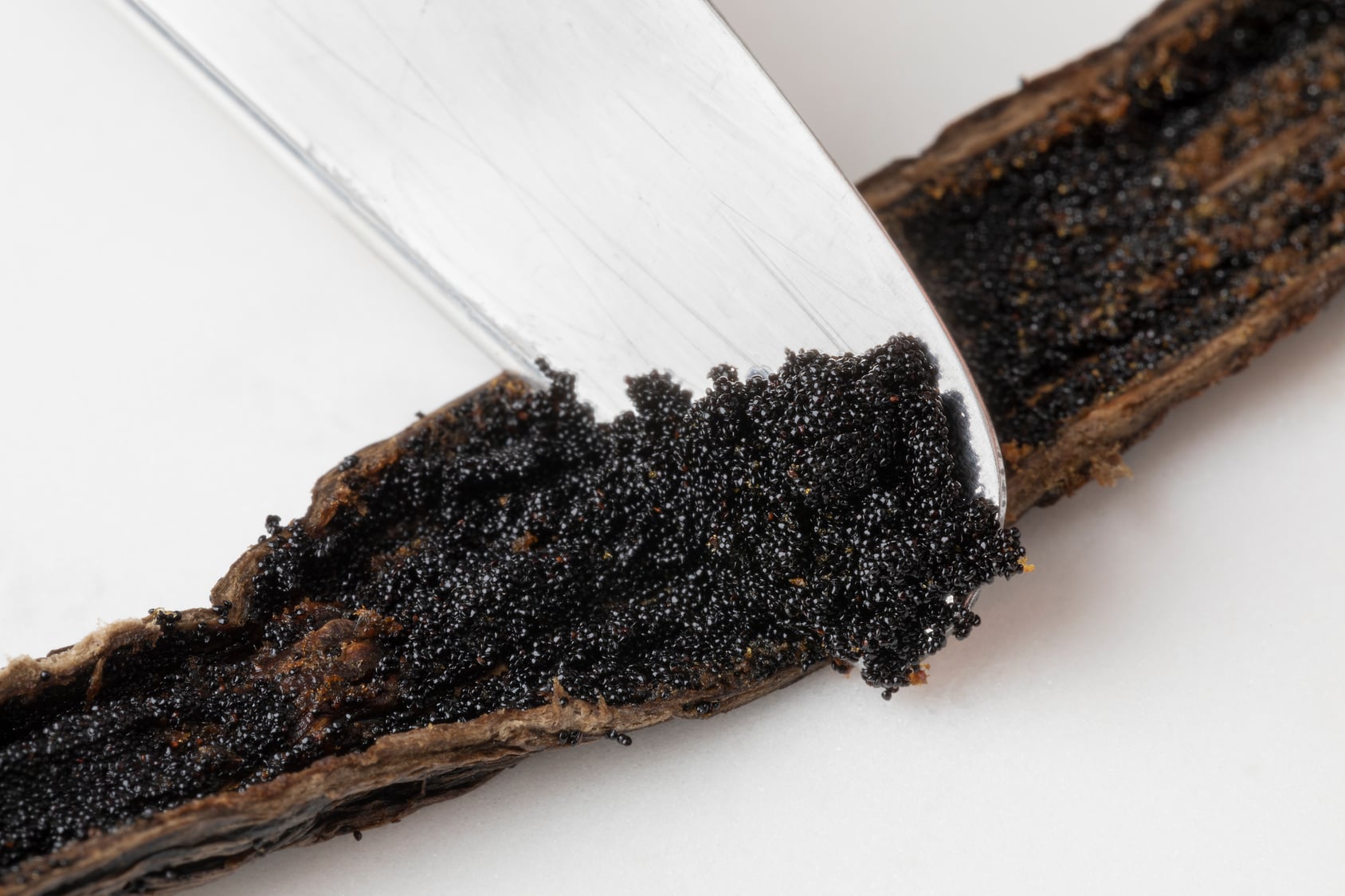
- Split the beans lengthwise. Lay a bean flat, run the tip of a paring knife down its length, and open it up. You do not need to scrape anything out. Splitting gives the alcohol access to the seeds and the inside of the pod, and it makes a real difference in how fast the extract darkens.
- Cut them in half if your jar is short. Beans need to be fully submerged. Anything sticking up above the alcohol can mold, which is the only way this project goes wrong.
- Count your beans. I use 6 to 8 split beans per cup of vodka. The commercial standard works out to roughly 5 beans per cup, so 6 to 8 gives you something noticeably stronger than the bottle at the grocery store. If beans are expensive where you are, 5 is genuinely fine.
- Pour the vodka over the top, seal the jar, and give it a shake.
- Put it somewhere dark and forget it. Mine lives in the cupboard above the stove with the baking things. I shake it whenever I notice it, maybe once a week at first and then almost never.
Do not refrigerate it. Cold makes it cloudy and slows the whole thing down. Room temperature in a dark cupboard is what it wants.
The timeline nobody is honest about
Here is where most recipes tell you eight weeks and stop. Eight weeks is true in the sense that you will have brown liquid that smells like vanilla and works in a cake. It is not the whole truth. At eight weeks it is thin. At six months it is genuinely good. At a year it is dark and syrupy and better than anything I have bought.
So what does that mean if you are standing in your kitchen at the end of September?
If I start today, the jar is usable by Thanksgiving baking and young but real by Christmas. That is the timeline I am on this year, and I am fine with it. What I do NOT do is pretend it is finished. When I give it away in December I write the date I started it on the label and a line that says it will be better in the spring and best next fall. People like knowing that. It turns a bottle of vanilla into something that keeps going.
The other thing worth knowing is that the beans keep working long after you start using the extract. When the jar gets down to about a third, I top it off with more vodka and keep going. The same beans will carry two or three refills before they give up. My current jar has beans in it from last October and it is the best vanilla in my kitchen.
If you truly want a finished, deep, year-old extract for gifts, the move is to start the next batch in January for the following Christmas. I know that sounds absurd. It is also the only way, and it is the kind of project that suits me, because I have an autoimmune disease and the days when I can stand in the kitchen for hours are not guaranteed. Twelve minutes in September that turns into a shelf of gifts in December is exactly the math I need.
In early December I pour off into four-ounce amber bottles, drop a split bean into each one, and tie a paper tag on with kitchen twine. The tag says what is in it, the date I started it, and one line about topping it off with vodka instead of throwing the bottle out. Danny thinks the tag is overkill. Every single person who has gotten one has asked me how to do it, so the tag stays.
What I would skip, and the questions I get
I would skip the vanilla extract kits. They bundle Grade A beans, a bottle of vodka you did not choose, and a couple of cute labels for more than the parts cost separately. Buy a bag of Grade B beans and use the vodka from the liquor store down the road.
I would also skip straining it. Some people filter the extract into clean bottles at the end. I leave the beans in, because they keep flavoring it and because a bean in the bottle is half the reason it looks like a gift.
Does it go bad? No. The alcohol keeps it indefinitely. Mine only gets better sitting there.
Can I make it without alcohol? You can steep beans in food-grade vegetable glycerin instead. It takes longer, it comes out sweeter and thinner, and it is not the same thing. If alcohol is not an option in your house it is worth doing, just do not expect it to taste like the vodka version.
How much cheaper is it really? A quarter pound of Grade B beans plus a bottle of vodka has been running me in the neighborhood of forty dollars, and it makes around three cups. Good pure vanilla at the store is ten to fifteen dollars for four ounces. So roughly half, and stronger, and it does not run out in the middle of a batch of cookies.
Can I use beans I already cooked with? Yes. If you scraped a bean for custard or ice cream, rinse the pod, dry it, and drop it in a jar of vodka. Spent pods still have plenty left in them. I keep a jar going just for those.
🛒 A few things I use for this
- Grade B Madagascar vanilla beans, the extract grade ones
- 4 oz amber glass bottles for gifting
- Wide mouth quart mason jars for steeping
- Kraft paper tags and twine for labeling
- A small canning funnel, which saves the counter
As an Amazon Associate I earn from qualifying purchases.
Once you have a jar going, it changes what you bake. I stopped measuring vanilla carefully somewhere around the second batch, and my pumpkin bread with fresh puree and my zucchini bread are both better for it. It is very good in baked apple cider donuts and in the topping on a peach crisp, and it is the kind of small thing that makes from-scratch cooking feel less like work, which is most of what slow living has meant for me.
Go split some beans. Put the jar in the cupboard. Then let October happen and come back to it in a few months.

