This post may contain affiliate links. If you book or buy through them, I may earn a small commission at no extra cost to you. Learn more.
The first cold morning here is always a surprise, even though it happens every single year. I went out to the garden last week in a sweatshirt for the first time since May, and the tomato plants had that tired, done look they get in September. There were three butternut squash sitting on the counter that Danny had brought home from a farm stand up the road, and I knew exactly what was happening that afternoon.
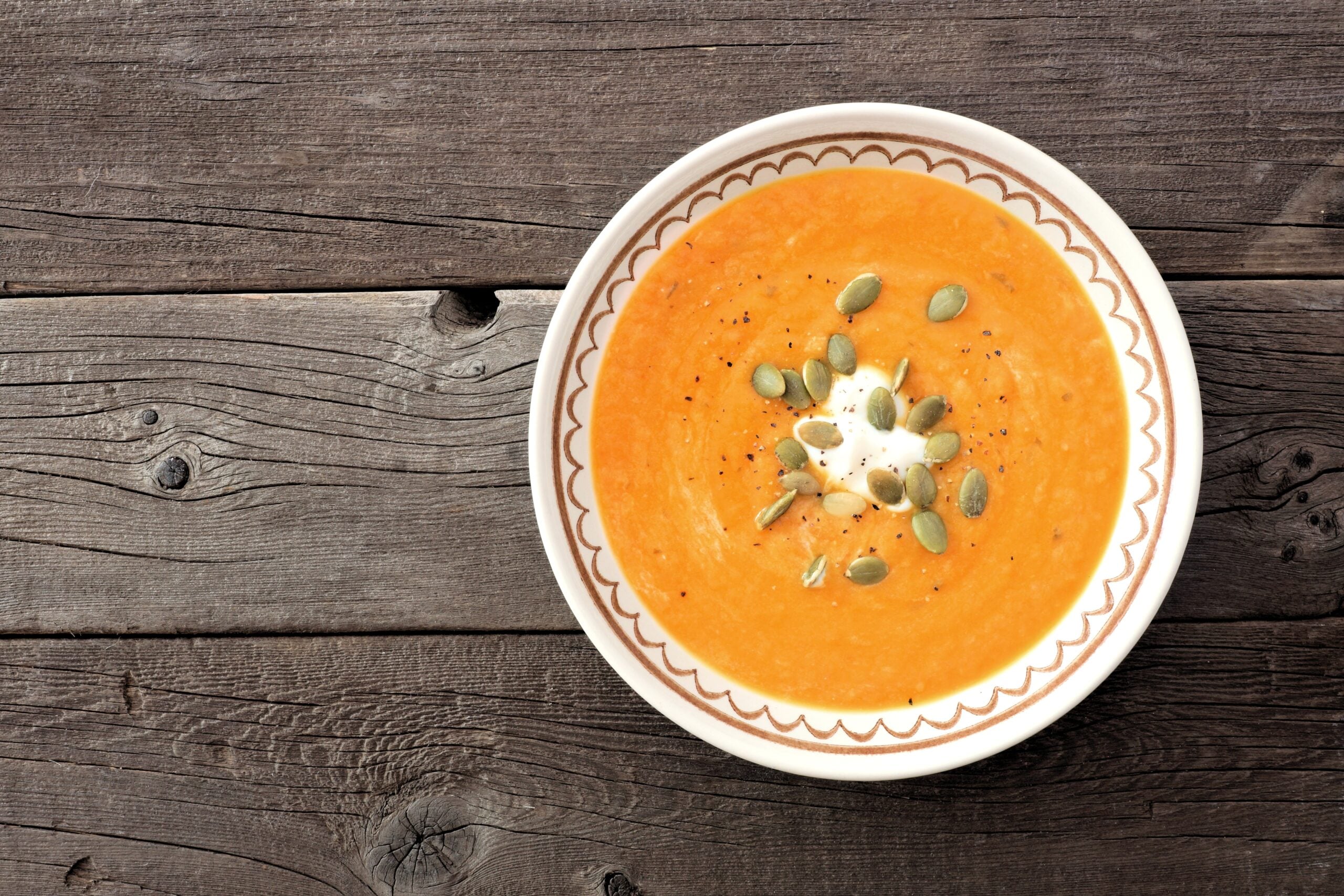
This is the butternut squash soup without cream that I make from the end of September straight through to February. No heavy cream, no half and half, no coconut milk unless I feel like it. It is still thick enough to coat the back of a spoon, and the flavor is squash instead of dairy, which is the whole point.
I want to say up front that I am not against cream. I just found out by accident that the soup is better without it, and once you know that, it is hard to go back.
Why I stopped adding cream
The first few years I made this, I did what every recipe told me to do. Simmer the squash in broth, blend it, pour in a cup of heavy cream at the end. It was fine. It was also sweet in a way I did not love, and it sat heavy, and I always felt like I had eaten something rich rather than something warm.
Then one night I was out of cream and I made it anyway. I roasted the squash instead of boiling it, because roasting was what I had time for, and I used less broth than usual because I was nervous about it going thin. What came out of the blender was the best version I had ever made. Deeper color. Actual squash flavor. Thick without being heavy.
The cream had been covering something up. Once it was gone, I could taste what was underneath.
There is a practical piece to this too. I have an autoimmune disease, and I do better on days when dinner is not heavy. A big pot of this sits in the fridge and I can heat a bowl at two in the afternoon when I am dragging, and it does not put me flat on the couch afterward. That matters more to me than it used to.
Start with a squash that is actually ripe
This is the part nobody says, and it is the reason most no-cream squash soups turn out watery.
A butternut squash that was picked early has a pale, matte skin and not much sugar in it. One that ripened on the vine has deep tan skin, no green streaking, and feels heavy for its size. The stem should be dry and woody, not green and soft. If you press a thumbnail into the skin and it dents, put it back.
A ripe squash roasts down into something almost jammy. An underripe one gives you water and fiber, and then you end up reaching for the cream to fix it. I buy mine in early fall and keep four or five in the mudroom where it stays cool, and they last into January without doing anything to them.
If you grow your own, this is one of the easier things to put in a Midwest garden, though it takes up more room than you think. I wrote about what actually grows well here in zone 5b if you are planning next year.
What goes in it
This makes a big pot, roughly eight bowls. I have never once made a small batch.
- 1 large butternut squash, about 3 pounds
- 1 yellow onion, quartered
- 1 head of garlic, top sliced off
- 2 carrots, cut into chunks
- 1 tart apple, quartered and cored (Honeycrisp or Granny Smith)
- 3 tablespoons olive oil
- 4 cups chicken or vegetable broth, plus a little more if needed
- 1 teaspoon salt, then more at the end
- 1/2 teaspoon black pepper
- 1/4 teaspoon nutmeg, freshly grated if you have it
- A splash of apple cider vinegar
The broth is where most of the flavor lives, so use a good one. I make bone broth in the slow cooker most weeks in the fall and there is almost always a jar of it in the fridge. If you are buying it, buy the one that gels when it is cold.
The apple is not optional in my kitchen. It is one small apple in a pot this size and you will not taste apple, but you will taste the difference. It rounds out the edges.
How I make it
- Heat the oven to 425. Cut the squash in half lengthwise and scoop out the seeds. I do not peel it. Peeling raw butternut squash is the worst job in the kitchen and it is not necessary.
- Put everything on a sheet pan. Squash cut side up, onion, garlic head, carrots, apple. Drizzle the olive oil over all of it and salt it well.
- Roast 45 to 55 minutes, until the squash is completely soft and the edges of the onion have gone dark brown. Those dark edges are flavor. Do not pull it early.
- Let it cool enough to handle. Scoop the squash flesh out of the skin with a big spoon. It should come away in one piece. Squeeze the garlic cloves out of the head.
- Blend it with 3 cups of broth first, not four. Add the pepper and nutmeg. Blend it longer than you think you need to, at least two full minutes, until it is completely smooth with no grain to it.
- Then thin it. Add broth a quarter cup at a time until it is the texture you want. Stop while it is still a little thicker than you think, because it loosens as it heats.
- Finish with vinegar and salt. A splash of apple cider vinegar at the end wakes the whole thing up. Then salt until it tastes like something instead of like nothing.
That last step is the one people skip. An under-salted squash soup tastes flat and sweet and you will think it needs cream. It does not. It needs salt and acid.
How to get it creamy with no cream at all
Four things, and they all matter.
Roast, do not boil. Simmering squash in liquid puts water into it. Roasting takes water out and concentrates the sugars. This is the single biggest difference between a thin soup and a thick one.
Use less liquid than the recipe says. You can always add more. You cannot take it back out without simmering the soup down for half an hour.
Blend it too long. Squash has fiber in it, and fiber that has not been fully broken down reads on the tongue as grainy rather than silky. A countertop blender does a better job than an immersion blender here. If you only have an immersion blender, run it around the pot for a solid three minutes.
Add fat, just not dairy. The olive oil the vegetables roasted in is already doing some of this work. If you want it richer, a tablespoon of butter stirred in at the end, or two tablespoons of full fat coconut milk, will get you there without turning it into cream soup.
🛒 A few things I use for this
- A countertop blender, which is what gets it truly smooth
- Half sheet pans, because everything roasts in one layer or it steams
- A sharp chef’s knife, the only thing that makes halving a squash safe
- An enameled dutch oven for reheating and holding it
- Wide mouth glass jars for the freezer
As an Amazon Associate I earn from qualifying purchases.
What we eat with it, and how long it keeps
Bread, always. A slice of sourdough toasted hard in the oven with olive oil on it. Lochlan is nineteen months old, so soup is still mostly a bread delivery system at his end of the table, and I have made my peace with that.
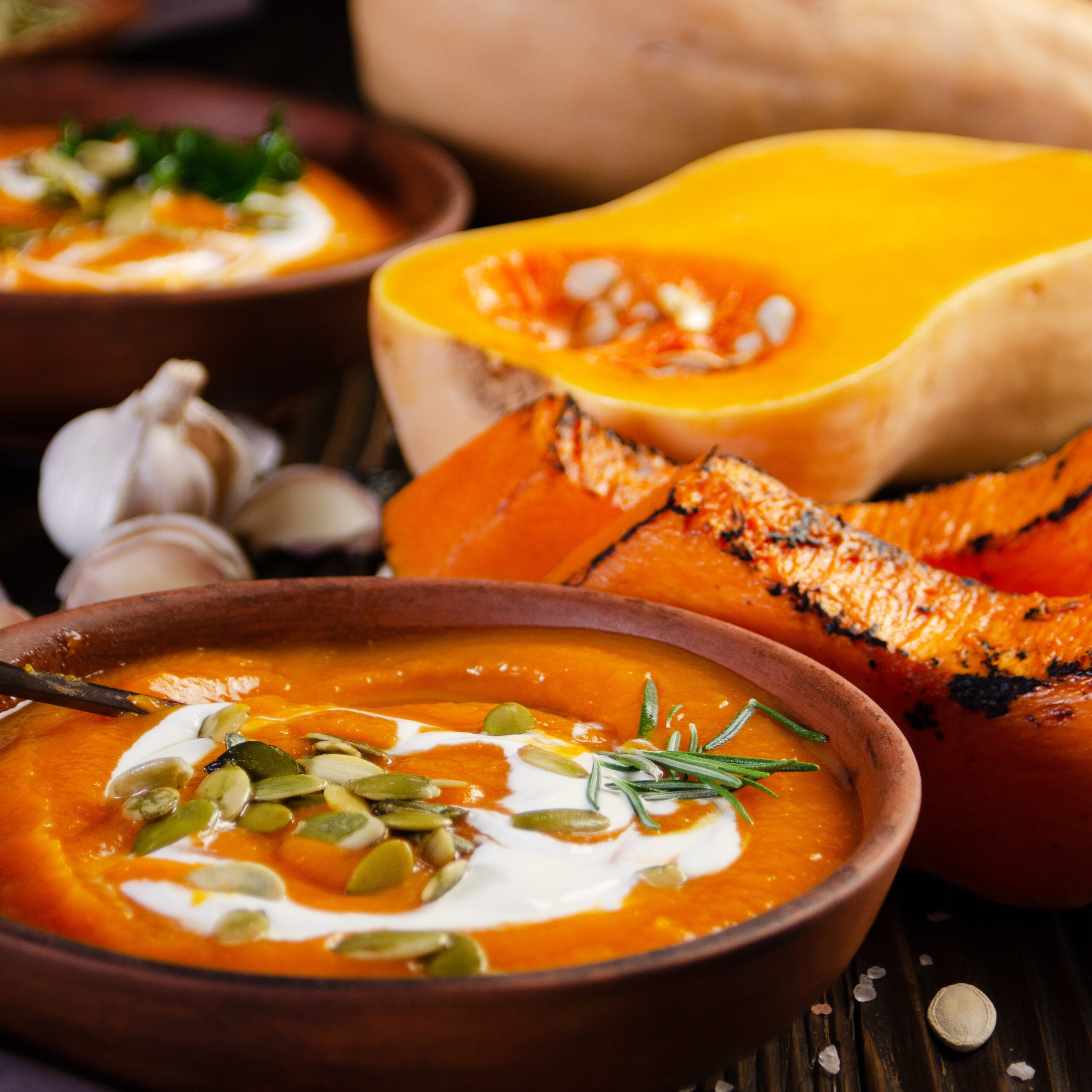
On the counter next to the pot I usually put out toasted pumpkin seeds, a little olive oil for drizzling, and black pepper. Danny puts hot sauce in his. That is between him and God.
It keeps five days in the fridge and gets better on day two. It freezes beautifully, which is most of the reason I make such a big pot. I fill wide mouth jars two thirds full, leave them on the counter until they are room temperature, then freeze them standing up with the lids off overnight before I put the lids on. A jar of this in the freezer in January is one of the better things I do for my future self, and it is the same thinking behind the rest of my from-scratch meal prep on low-energy days.
A few things people ask me
Can I use a different squash? Yes. Kabocha is wonderful and even thicker. Acorn works but is more watery, so cut the broth back to three cups. Sugar pumpkin is fine. A carving pumpkin is not.
Do I really not have to peel it? You really do not. Roasted skin separates from the flesh on its own. I have been making it this way for years now.
Mine came out watery anyway. Now what? Put it back on the stove uncovered at a low simmer and let it reduce for twenty minutes. It will come back. Then check the salt again.
Can I make it in the slow cooker? You can, but you lose the roasting, and the roasting is the recipe. If you are short on time, roast the vegetables one evening and blend the soup the next day. The roasted squash keeps fine in the fridge overnight.
That is the whole thing. Three squash on the counter and a cold morning and a pot that will feed us twice. If you make it, salt it more than feels right and let the onions go dark. Those two things are most of it.

