This post may contain affiliate links. If you book or buy through them, I may earn a small commission at no extra cost to you. Learn more.
The first cold morning we got this year, I stood at the kitchen window with my coffee and watched Dewey refuse to come in from the yard, and I thought about stew. That’s how it happens every fall. Something in the light shifts here in Long Grove and I want the house to smell like onions and bay leaves by two in the afternoon.
This slow cooker beef stew from scratch is the one I make on repeat from the end of September through February. No packet of onion soup mix, no can of cream of anything. Just beef, vegetables, broth, and eight hours of not thinking about it. And that last part is the whole reason it earned a permanent spot in our rotation. I have an autoimmune disease, and there are days when standing at the stove for an hour is not going to happen. On those days this still gets dinner on the table.
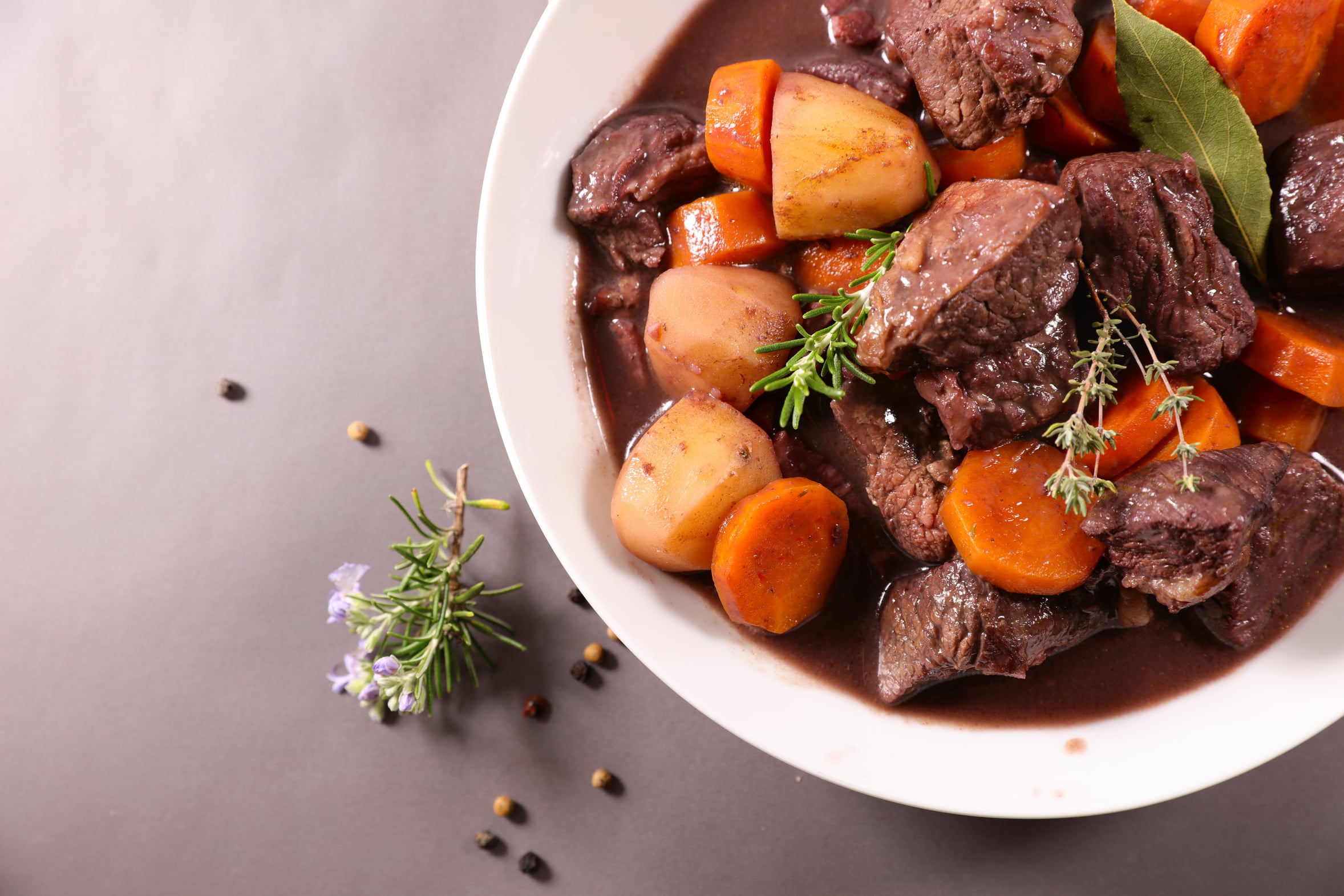
Buy a chuck roast, not “stew meat”
I made this wrong for years and this was the reason.
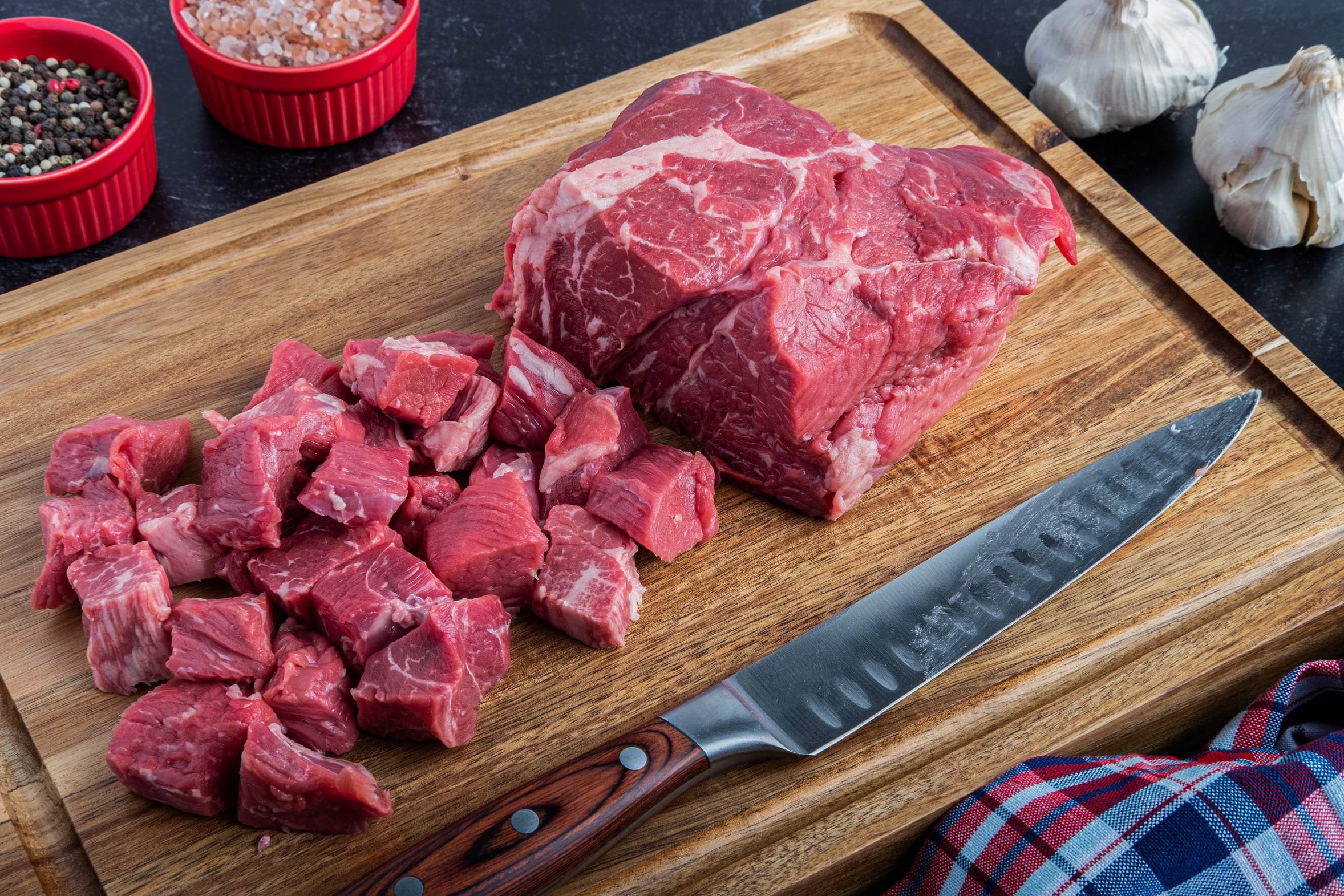
The packages labeled stew meat at the grocery store are trimmings. They come from whatever the butcher was cutting that day, which means you get four cuts in one package, all with different amounts of connective tissue, all cooking at different speeds. That’s why you end up with two tender bites and one that feels like a pencil eraser in the same bowl.
Buy a boneless chuck roast instead and cut it up yourself. It takes about six minutes. Chuck has a lot of collagen running through it, which is exactly what you want in a slow cooker, because over eight hours that collagen melts into gelatin and gives you the thick, glossy sauce everyone is chasing with cornstarch. Cut the pieces bigger than you think you should, around an inch and a half. Small pieces overcook and go stringy.
I get a three pound roast for our family of three, which sounds like a lot until you remember that Lochlan eats stew now and that I want leftovers on purpose. If you see a whole chuck roast on sale, buy two and freeze one cubed and portioned. I talk more about that kind of thing in my post on the from-scratch freezer meals I actually keep on hand.
The ten minutes I don’t skip
Almost every slow cooker stew recipe online tells you to put everything in raw and walk away. You can do that. It will be food. But it will taste flat in a way that’s hard to name, and no amount of salt at the end fixes it.
The fix is browning the beef first. Ten minutes in a hot cast iron skillet, in two batches so the pan stays hot, until the pieces have real dark color on at least two sides. Then a minute of tomato paste in that same pan until it darkens and smells almost sweet, and a splash of wine or broth to scrape everything off the bottom.
That brown layer in the pan is the difference between beef soup and beef stew. It’s where the depth comes from.
Here’s my honest version though. On a bad day I skip it. I dump it all in raw, add an extra spoonful of tomato paste and a good glug of Worcestershire to cover for the missing browning, and nobody at my table has ever complained. It is maybe seventy percent as good. Seventy percent of a real dinner on a day I couldn’t stand up long is worth more to me than a hundred percent of a dinner I never made. That’s the same math I use in my meal prep approach for low-energy days.
How I make it
This fills a six or seven quart slow cooker almost to the top.
What you need
- 3 lb boneless chuck roast, cut into 1.5 inch cubes
- 1/4 cup all-purpose flour, 2 tsp salt, 1 tsp black pepper
- 2 tbsp bacon fat, butter, or olive oil
- 1 large yellow onion, diced
- 4 cloves garlic, smashed
- 3 tbsp tomato paste
- 1 cup dry red wine, or another cup of broth
- 4 cups beef broth, or homemade bone broth if you have it in the freezer
- 2 tbsp Worcestershire sauce
- 2 bay leaves and 1 tsp dried thyme
- 1.5 lb small potatoes, halved
- 4 carrots, cut into thick coins
- 3 stalks celery, sliced thick
- 1 cup frozen peas
What you do
- Toss the beef with the flour, salt and pepper in a big bowl until every piece is dusted.
- Heat the fat in a cast iron skillet over medium-high. Brown the beef in two batches, about four minutes a batch, and move it to the slow cooker as it’s done. Don’t crowd the pan and don’t fuss with it.
- Turn the heat down, add the onion to the same pan and cook it about three minutes. Add the garlic and tomato paste and stir for one more minute until the paste turns brick red.
- Pour in the wine and scrape the bottom of the pan until it’s clean. Let it bubble for a minute, then pour the whole thing over the beef.
- Add the broth, Worcestershire, bay leaves, thyme, potatoes, carrots and celery. Stir once. The liquid should come most of the way up, not cover everything.
- Low for 8 hours. High for 4 if you started late, though low is better.
- Fish out the bay leaves. Stir in the frozen peas and let them sit in the heat for five minutes. Taste it. It will almost certainly want more salt than you expect.
A note on timing, because this is the thing nobody mentions. Eight hours on low means you start it at nine in the morning for a five o’clock dinner, which around here happens during Lochlan’s morning nap. If your slow cooker runs hot, and most of the newer ones do, check it at seven hours. Overcooked stew beef shreds into threads and the potatoes turn to paste.
🛒 A few things I use for this
- A 7 quart programmable slow cooker. Worth sizing up if you want leftovers.
- A 12 inch cast iron skillet for the browning step. Mine was my grandmother’s.
- Tomato paste in a tube. You only need three spoonfuls and the rest of a can always goes bad in my fridge.
- Whole dried bay leaves. They last forever and they do more work than people think.
As an Amazon Associate I earn from qualifying purchases.
When it comes out thin, and other things that go wrong
The sauce is watery. Usually this means too much liquid to begin with. Vegetables give off a lot of water in a covered pot and none of it evaporates. Next time cut the broth back by a cup. To fix it now, take the lid off, turn it to high, and give it half an hour. Or stir two tablespoons of cornstarch into a few tablespoons of cold water and pour that in, then leave it on high for fifteen minutes.
The beef is tough. Almost always undercooked, not overcooked, which feels backwards. Tough beef at hour six is beef that needs two more hours. Give it more time before you give up on it.
It tastes like it’s missing something. Salt first, and more than you think. Then a splash of red wine vinegar or a squeeze of lemon right at the end. Acid is usually the thing.
The potatoes fell apart. Use waxy potatoes, not russets. Yukon golds or small red potatoes hold their shape through a long cook. Russets dissolve.
What we eat with it
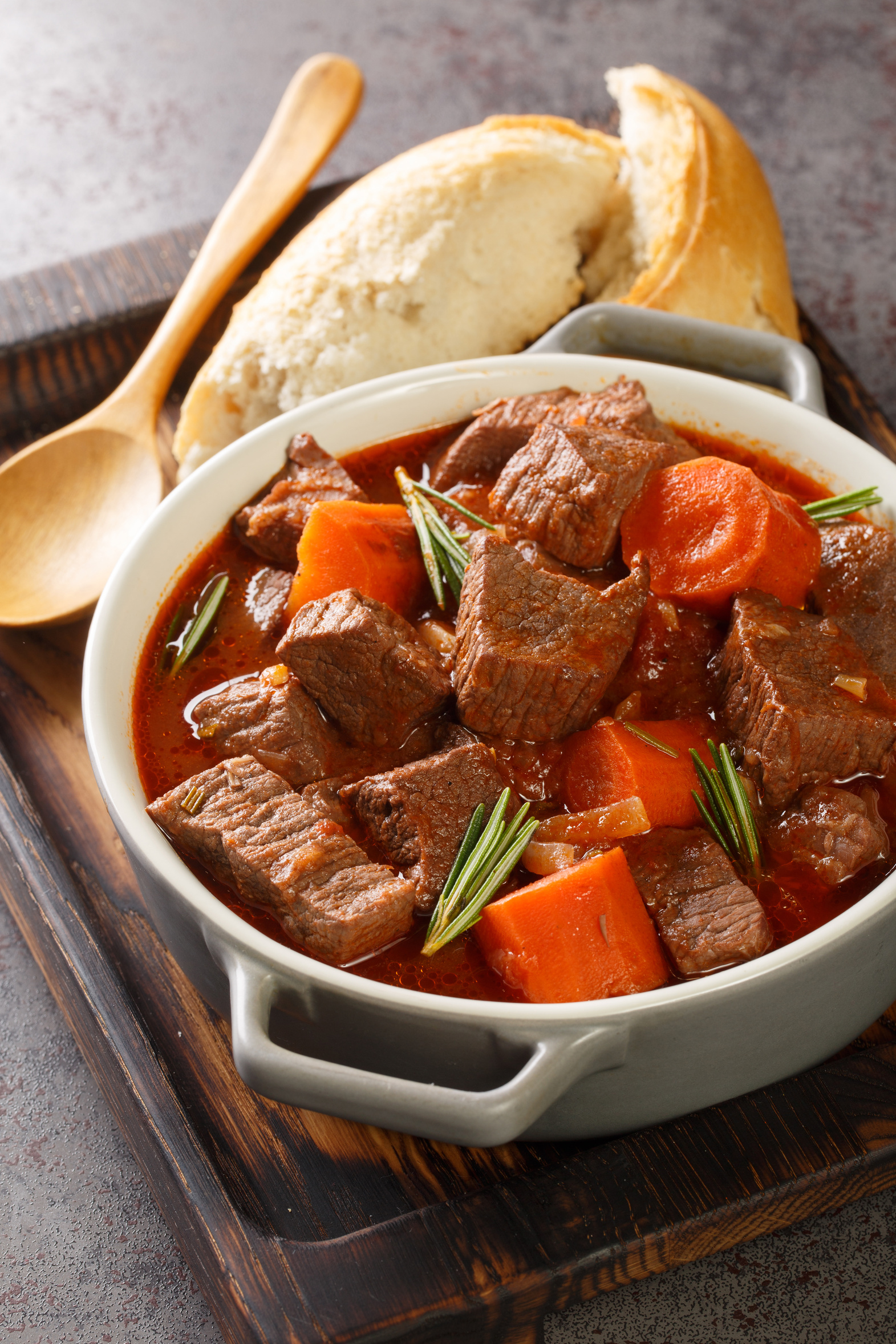
Crusty bread, always. Sometimes biscuits if I have the energy, and a green salad if I’m being honest about vegetables. Danny puts hot sauce in his, which I have made peace with.
It’s better the second day, genuinely better, because the gelatin sets up overnight and the flavors settle. It keeps five days in the fridge and freezes well for three months, though I leave the potatoes out of the batch I’m freezing because they go grainy. If you want more of this kind of cooking, our real weeknight dinner rotation is mostly built on the same idea, and the chicken noodle soup I make all fall is the other pot that runs constantly around here this time of year.
If you make it, start it on a Sunday. There’s something about coming in from the cold to a house that already smells like dinner.

