This post may contain affiliate links. If you book or buy through them, I may earn a small commission at no extra cost to you. Learn more.
The turkey carcass sits on my counter every year, and every year I have the same thought, which is that I am too tired to deal with it. Making turkey stock from the carcass is the last thing I want to do after cooking all day. So a few years ago I stopped trying to do it on Thursday night.
Now Danny pulls the last of the meat off the bird while I load the dishwasher, and the bones go straight into a bag in the freezer. I make the stock on Friday. Or Saturday. Or in the middle of January, when the house is cold and I want something simmering. It works exactly the same.
That was the thing nobody told me when I started cooking more from scratch. Stock is not a Thanksgiving-night project. It is a whenever-you-have-four-hours project, and the bones will wait.

The short version
Break the carcass down, cover it with cold water by an inch, add onion, carrot, celery and a few peppercorns, and keep it at a bare simmer for three to four hours. Do not let it boil and do not salt it. Strain it, cool it fast, and lift the fat cap off the next morning. One turkey gives me two to three quarts, and it keeps five days in the fridge or about six months in the freezer.
That is the whole method. Everything below is the detail that made mine better.
Freeze the carcass if you need to
This is the part that changed Thanksgiving for me, so I am putting it near the top.
You do not have to make stock the night of. You do need to get the bird off the counter within about two hours of serving, so strip the meat while people are still sitting around the table, and refrigerate the meat separately. Then break the carcass into pieces small enough to fit in a gallon freezer bag. I snap the rib cage in half with my hands and cut through the back with kitchen shears. It is not elegant.
Bagged bones keep about three months in the freezer, and they go into the pot frozen. No thawing. I throw in the neck and the wing tips too, and all week I add the celery ends and onion skins from everything else I cook into a second bag.
Some years I make stock on Friday morning because the house smells like it should. Some years I do not have it in me, and the bag sits in the freezer until a quiet Sunday in January. Both are fine.
What goes in the pot
One turkey carcass, broken up. Two onions, quartered, skins left on because they make the stock a deeper color. Four carrots and four celery stalks, cut in big pieces (no need to peel anything, this all gets strained out). A teaspoon of black peppercorns, two bay leaves, and a handful of parsley stems if I have them.
Then cold water to cover by about an inch, which for one carcass in my pot is close to a gallon.
No salt. This is the one I feel strongly about. The stock reduces by nearly half while it simmers, so anything you salt at the start concentrates into something you cannot fix later. You season the soup, not the stock.

How long I simmer it
Bring it up slowly and then hold it at a bare simmer, where you see a bubble break the surface every few seconds and not much else. A rolling boil emulsifies the fat into the liquid and you end up with stock that is cloudy and greasy, and you cannot undo it. Low and slow.
For the first twenty minutes, gray foam rises to the top. Skim it off with a spoon and throw it away. After that it mostly stops.
Three to four hours with the lid set slightly ajar. At three hours it tastes like turkey. At four it tastes like dinner. I have gone five and it does not get better, just smaller.
The slow cooker version
I have an autoimmune disease, and there are days when standing at the stove minding a pot for four hours is NOT happening. On those days the slow cooker does it instead.
Same ingredients, low for eight to ten hours, and I usually start it after Lochlan goes down and strain it in the morning. It is gentler than the stove, so it almost never goes cloudy, and I do not have to think about it once.
The honest trade-off: a slow cooker does not reduce. The lid seals, the steam goes nowhere, and you end up with more liquid that tastes thinner than the stovetop version. If that bothers you, pour the strained stock into a wide pot and boil it down for twenty minutes. Most of the time I do not bother.
Straining and cooling
Lift the big pieces out with tongs first, then pour the rest through a fine mesh strainer set over a big bowl. If you want it really clear, run it through again with a layer of cheesecloth in the strainer. For soup, I skip that step.
Cooling is the part that people get wrong, me included for years. Do not put a hot stockpot straight into the fridge. It warms everything around it and takes most of a day to come down. Divide the stock into shallow containers instead, or set the bowl in a sink of ice water and stir it now and then. You want it cold within a few hours.
Then refrigerate it overnight. In the morning the fat has set into a pale cap on top and lifts off in one piece. I save a spoonful of that for roasting potatoes and throw out the rest.
Good stock will be jiggly and set like loose jelly when it is cold. That is the collagen from the bones and it means you did it right. It melts back to liquid the second it hits heat.
How much you get, and how I store it
One carcass and a gallon of water gives me somewhere between two and three quarts, depending on how hard it simmered.
In the fridge it keeps five days. In the freezer it holds up well for four to six months, which covers me straight through soup season.
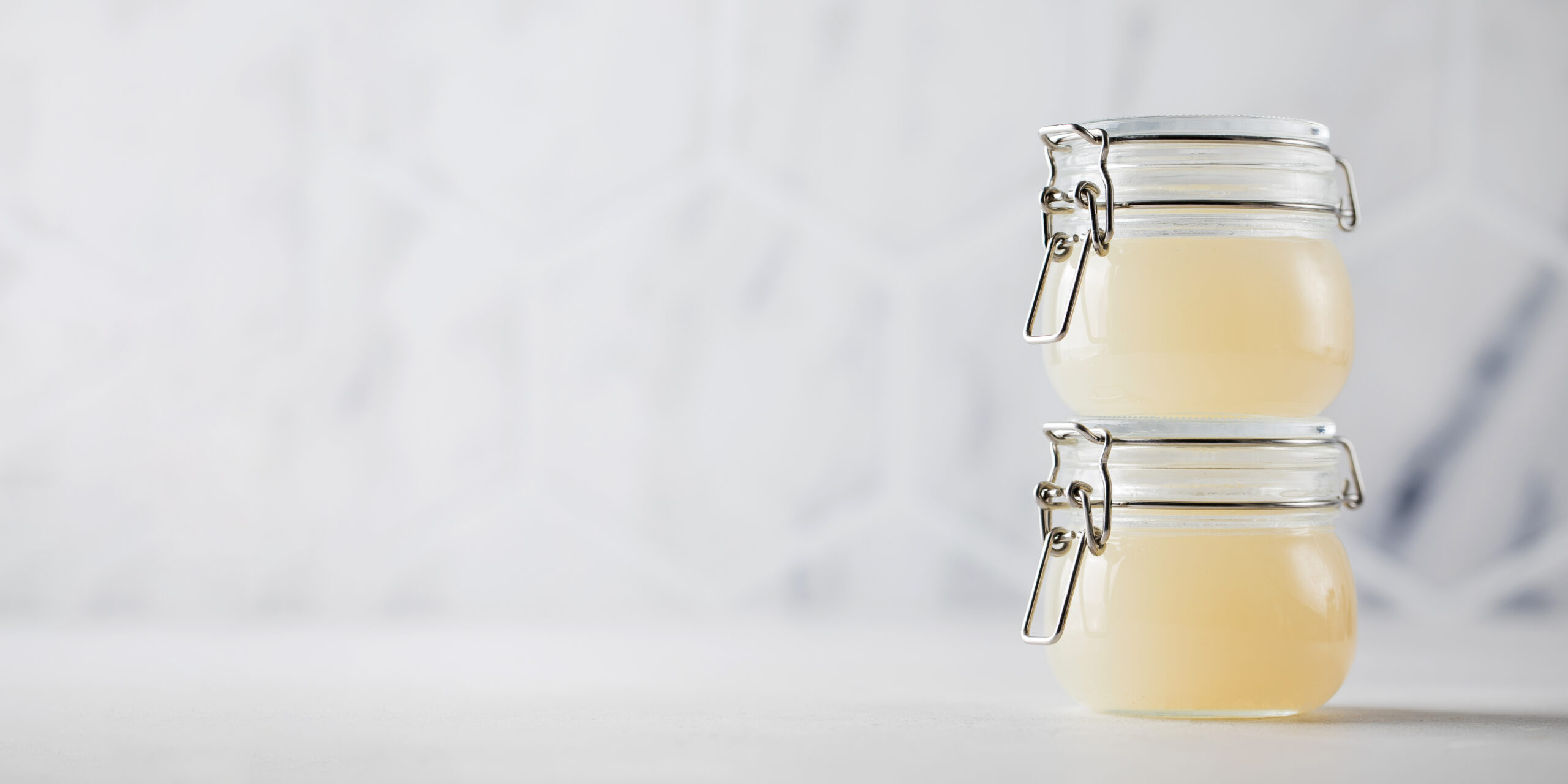
I freeze it in wide mouth pint jars, and the detail that saves you a mess is leaving a full inch of headspace at the top. Liquid expands and a jar filled to the shoulder will crack. Freeze them with the lids off until solid, then screw the lids on. I also fill one ice cube tray, because a couple of frozen cubes is perfect for loosening a pan sauce.
This is not bone broth
People use the words interchangeably and they are not quite the same thing.
Bone broth goes much longer, often twelve to twenty-four hours, usually with a splash of vinegar to pull more minerals and gelatin out of the bones. It is thicker and richer and I drink it from a mug in February. If that is what you are after, I wrote out my slow, from-scratch bone broth method separately.
Turkey stock is the faster, lighter cousin. It is a cooking ingredient, not a drink, and four hours is plenty.
What I actually make with it
Most of it becomes soup. Chicken noodle soup from scratch is the obvious one, and turkey stock makes it better than chicken stock does, which surprised me the first time.
Beyond that: I cook rice in it instead of water, which costs nothing and changes everything. I use it as the base for gravy all December. And a few quarts go toward the freezer meals I keep stocked so there is something to pull out on the low-energy days.
What I would skip
Do not roast the bones again before you start. Plenty of recipes tell you to and it makes sense for raw bones, but your turkey already spent hours in the oven. Roasting it twice pushes it toward bitter.
Do not throw in the skin, either. It is mostly fat, and all it does is give you more to scrape off in the morning.
And do not add potatoes or anything starchy hoping to thicken it. It clouds the stock and does not thicken anything.
🛒 A few things I use for this
- A 12 quart stainless stockpot, which is the size that actually fits a whole carcass with water over it
- A fine mesh strainer for the first pass
- Unbleached cheesecloth if you want it clear
- Wide mouth pint jars for freezing, because straight sides survive it and tapered ones crack
- A fat separator if you want to use the stock the same day instead of chilling it overnight
As an Amazon Associate I earn from qualifying purchases.
Questions I get about turkey stock
How long can the carcass sit before I make stock?
Get it off the counter within two hours of the meal. After that, three or four days in the fridge, or about three months in the freezer. When in doubt, freeze it. There is no penalty for making it later and it goes into the pot straight from frozen.
Can I use the carcass from a brined or seasoned turkey?
Yes, and this is the one time I taste as I go. A brined bird carries a lot of salt into the stock, so use a little more water than usual and taste it at the three hour mark before you reduce it further.
Why is my turkey stock cloudy?
It boiled. Once the fat emulsifies into the liquid you cannot strain it back out, so keep it at a bare simmer the whole time. It still tastes fine. It just will not be pretty.
Do I have to skim the fat off?
Not for soup, where a little fat is good. Chilling it overnight makes the job take about ten seconds, so I usually do it anyway, and I keep a spoonful back for potatoes.
Can I make stock from a carcass that was picked clean?
That is exactly what you want. The flavor is in the bones and the connective tissue, not the meat.
If you have the bag of bones in the freezer and that is as far as you get this week, that still counts. Mine have waited until January more than once.

